
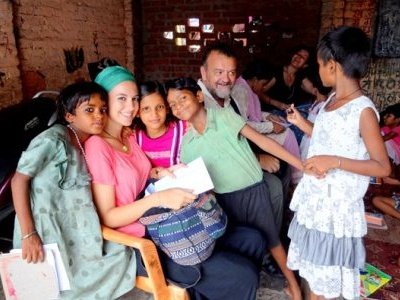
In many low-income neighborhoods in India, children do go to school, but the classrooms are crowded, books and supplies are scarce, and one teacher may cover several subjects. Some children fall behind early; others leave school to help their families earn. A volunteer who can take a small group for reading practice or run a lively math game gives them something a stretched school rarely can.
Volunteering India’s teaching placements are in Jaipur, the capital of Rajasthan, where we started running programs in 2026. On our teaching program, you assist local teachers with middle-school English, math or sports in government, NGO and community schools on weekday mornings. On our slum schools program, you teach small groups of children with a grassroots project that is free for families, usually in the afternoons. And at the women’s centers we work with in Delhi and Jaipur, teaching English is the main job. Here are seven reasons to give it a try.
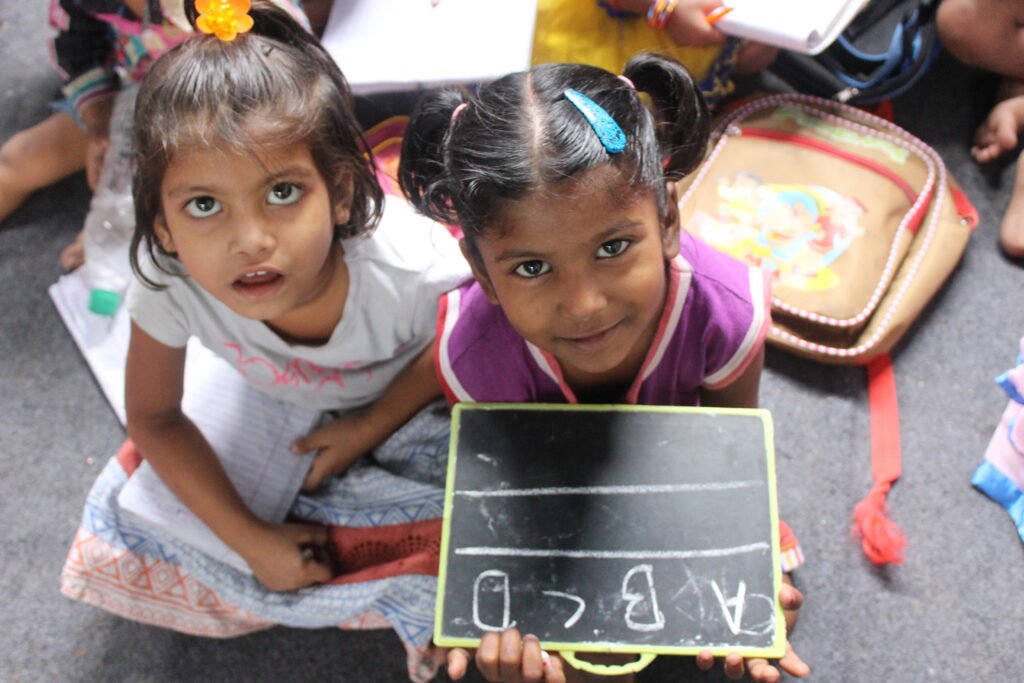
1. Children get the practice a crowded class can’t give them
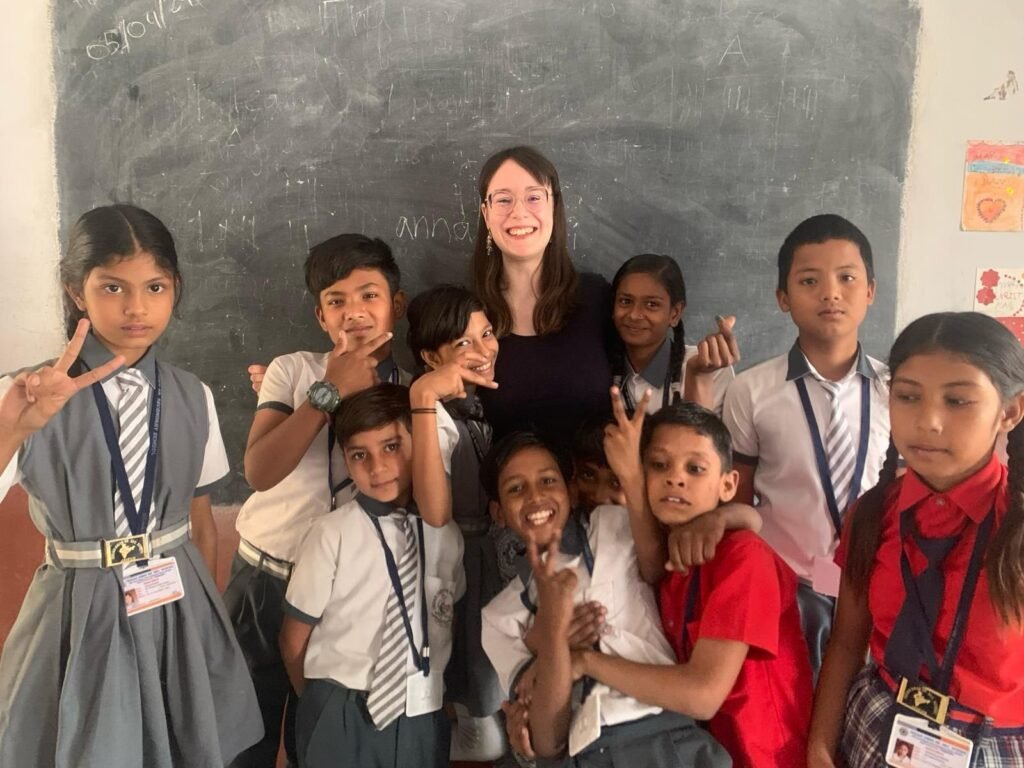
Nobody expects you to teach physics or calculus. What most children need is practice with the basics: reading aloud, spelling, times tables, word problems and conversation. Many study English as a school subject but almost never hear it spoken outside the lesson, so a volunteer who chats, sings and plays games with them in English fills a real gap.
2. Encouragement can change how a child sees school
For a child who has started to fall behind, school can quickly become something to dread. A volunteer who takes an interest, listens to their stories and tells them about life in another country can make learning feel exciting again. Praise a child for getting a sum right in front of the class, and you may see them try twice as hard the next day.
3. Creativity counts more than qualifications
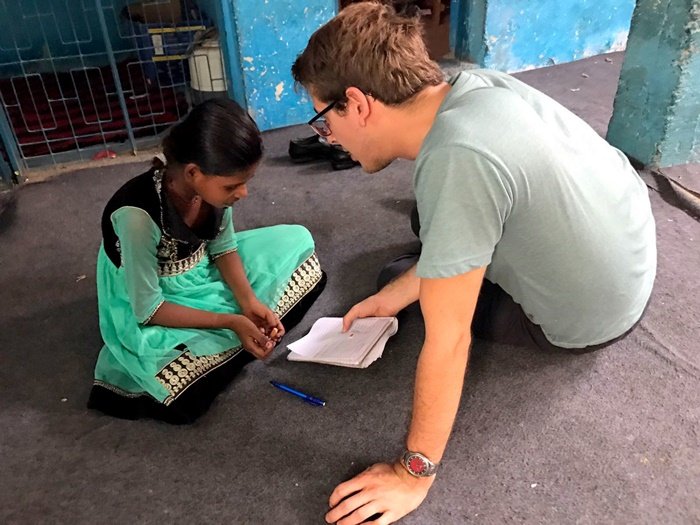
You don’t need a teaching qualification or a TEFL certificate, just intermediate English. What schools want is a volunteer who arrives prepared, keeps calm and follows the teacher’s lead. After that, imagination does the rest: a story that turns into a role play, flashcards cut from old cardboard, a counting game played with pebbles. Our post on activities for volunteering with children has more ideas.
4. English opens doors for women and girls
Teaching isn’t only for schools. At the women’s centers in Delhi, most volunteers teach spoken English to young women aged about 17 to 20, which can help them find work. At the women and girls center in Jaipur, you hold English conversation classes for girls aged 12 to 17. For students who have had little schooling, being able to speak up in English is a big step in confidence as well as a practical skill.
5. You will see the world a little differently
Spending your mornings in a classroom where children share pencils and textbooks, yet throw themselves into every game, tends to change what you think you need. You may well go home more patient, more grateful for what you have and more curious about how other people live.
6. Your CV gets stronger, and so do you
Planning lessons, managing a group and explaining things across a language barrier are skills that carry into any career, not just teaching. Volunteering abroad shows employers and universities that you can adapt, take responsibility and work in a team. You also share the experience with volunteers from around the world, whether at our volunteer house or on weekend trips together.
7. Jaipur makes a great base
With school finishing at lunchtime on the teaching program, your afternoons are free for the Pink City: the bazaars, the honeycomb facade of Hawa Mahal, the City Palace and sunset from Nahargarh Fort. At weekends, you can explore Amber Fort or, with your coordinator’s help, plan trips to the lake town of Pushkar, the Taj Mahal in Agra or Ranthambore National Park.
The teaching program is open from age 18 and the slum schools program from 17, for one week to 12 weeks, starting every Sunday. Programs start from $495 for one week. Email info@volunteeringindia.com to find the teaching placement that suits you.