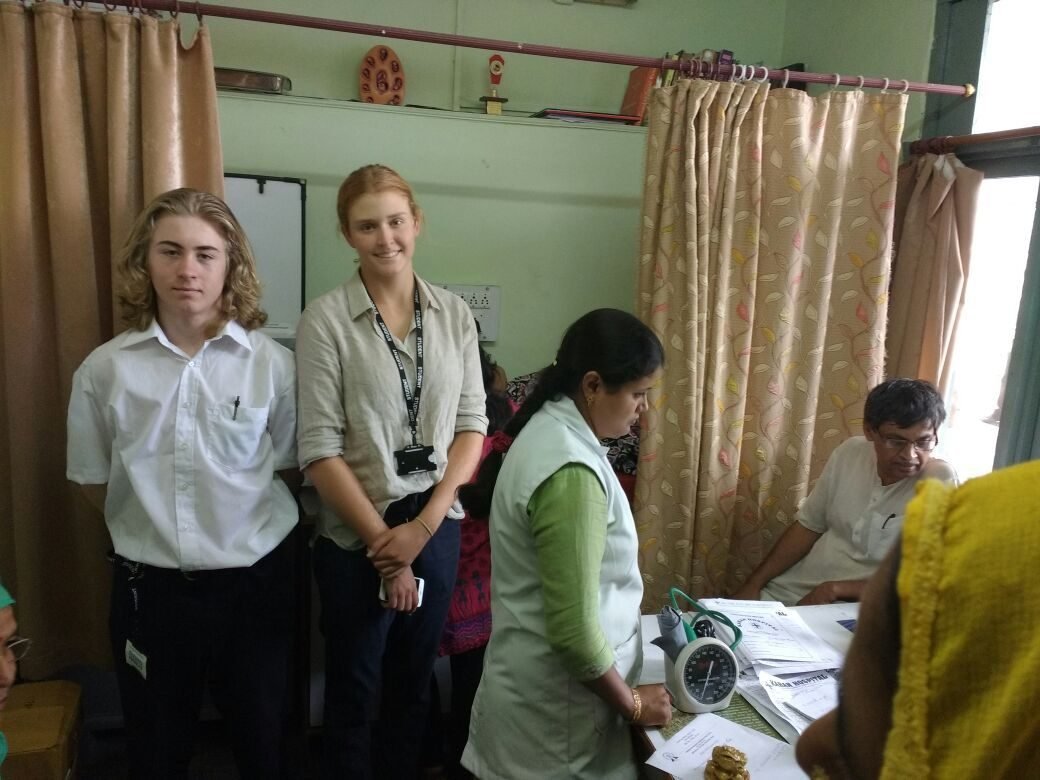
A hospital placement for students who want to see how medicine works in India. You join a private hospital in Delhi with modern facilities and experienced staff, and spend your days with a doctor, nurse or other professional as they see patients, run their wards and carry out procedures.
Most of what you do is observation. Hospitals cannot ethically let anyone without the right training take part in procedures, so how hands-on you get depends on your level of study and what your supervisor allows.
At a glance
- A full-service private hospital in Delhi, with rotations through the departments you choose.
- For students of medicine, nursing, dentistry and physiotherapy, and pre-med students.
- Monday to Friday, following your supervisor’s hours.
- From two weeks, with weekly start dates.
- Live with other volunteers and interns at our base in South Delhi.
Departments
Tell us three or four departments you would like to see, and you rotate between them depending on how long you stay. The hospital’s departments include:
- Emergency, critical care and general wards
- Internal medicine and pediatrics
- Surgery and the operating theater
- Orthopedics
- Obstetrics and gynecology
- Radiology and imaging
- Laboratory, blood bank and pharmacy
- Dialysis
- Nursing and physiotherapy
Longer stays can include the medical specialties, such as cardiology, neurology, pulmonology, gastroenterology and nephrology, and surgical ones such as anesthesia, ENT and ophthalmology. Pre-med students usually spend most of their time in emergency and internal medicine. Final placements depend on what each department and supervisor can offer during your dates.
What you’ll see and learn
- History taking, examinations and how doctors communicate with patients and families.
- Ward rounds, case discussions and how treatment is planned and reviewed.
- How a busy Indian hospital organizes care, from triage to discharge.
- Procedures and surgery from the observation area, where your supervisor allows it.
- Conditions you rarely see at home, and how they are diagnosed and managed.
Working responsibly
You observe and assist only as far as your training allows and your supervisor permits. Interns never treat patients on their own, and patient privacy comes first: no photos on the wards, and no sharing of patient details.
Hospitals run on their own timetable. Shifts, theater lists and ward rounds move, and the interns who get the most from a placement are the ones who stay flexible, ask good questions and show up on time.
How your week runs
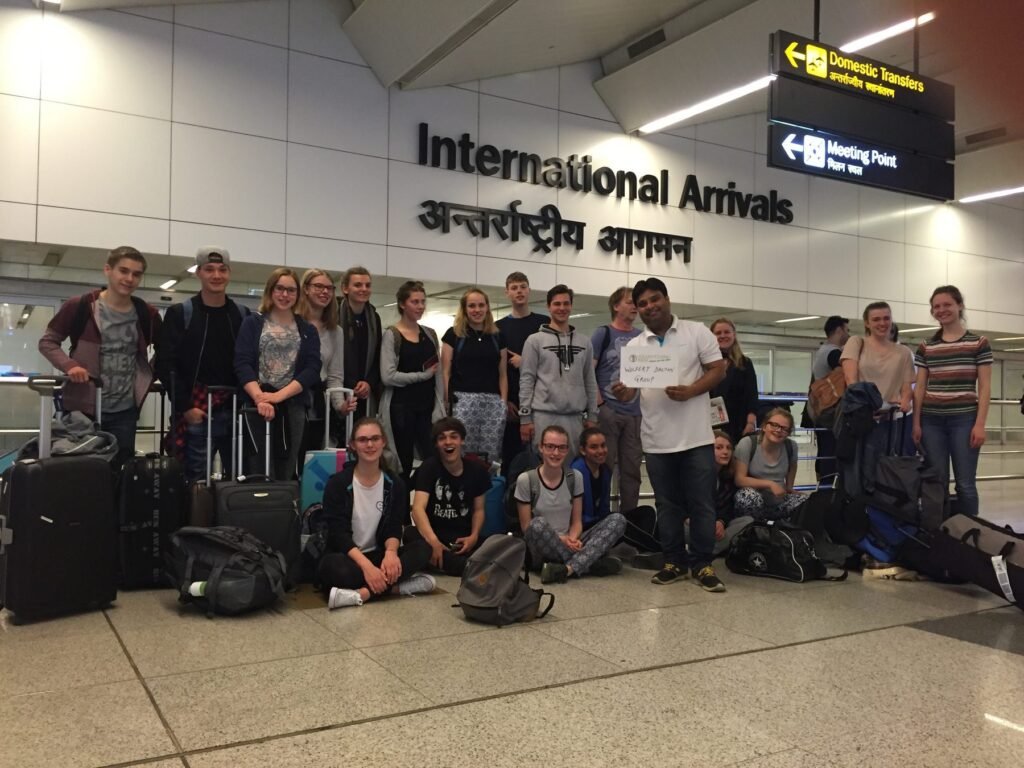
- Sunday: we meet you at Indira Gandhi International Airport and take you to the hostel.
- Monday: a half-day orientation on safety, culture and getting around, and a walk around the neighborhood.
- Tuesday to Friday: your first days at the hospital, about 9:30am to 4pm. Your coordinator takes you there the first time.
- From week two: Monday to Friday at the hospital. Your hours follow your supervisor’s schedule, so be ready for some changes.
A typical day
- Morning: Breakfast at the hostel, or at the hospital if your shift starts early.
- 9:30 to 10am: Arrive at the hospital and join your supervisor for rounds or clinic.
- Midday: Lunch at the hospital canteen, at your own cost.
- Afternoon: Clinics, procedures or case discussion, depending on the department.
- 4pm: Finish and head back to the hostel.
- 7pm: Dinner at the hostel.
Your supervisor sets your hours, and they can change from week to week as you move between departments.
Evenings and weekends
Project days finish mid-afternoon, so most evenings start with a Metro ride somewhere new and end back at the hostel over dinner with the other volunteers. Delhi rewards curiosity: within an hour of your base you can be eating parathas in the lanes of Old Delhi, watching the light change on Humayun’s Tomb or bargaining for scarves at Sarojini Nagar.
- In the city: Chandni Chowk and the Jama Masjid, the Red Fort, Lodhi Garden, Hauz Khas village, Dilli Haat’s food and craft stalls, and the evening light show at Akshardham.
- Day trips: the Taj Mahal and Agra Fort, an easy day out by train or car.
- Weekends away: the pink sandstone forts and palaces of Jaipur, the Golden Temple in Amritsar, the riverside ghats of Varanasi, or the mountain air of Rishikesh.
Our weekend trips take care of the trains, hotels and guides, and your coordinator is happy to help you plan an independent trip. Sundays have no meals at the hostel on purpose: it is the day to try Delhi’s street food.
Your base in Delhi
Home is a hostel in the south of the city that we share with volunteers from other projects, so you are rarely short of company for dinner or a weekend plan. The Metro is a few minutes’ walk away, which puts your project and most of Delhi within easy reach, and the Lotus Temple and Khan Market are close enough for a first evening out.
You share a room with volunteers of the same gender, cooled by air-conditioning in the hot months. If you would like a room to yourself, ask when you apply and we will price it for you.
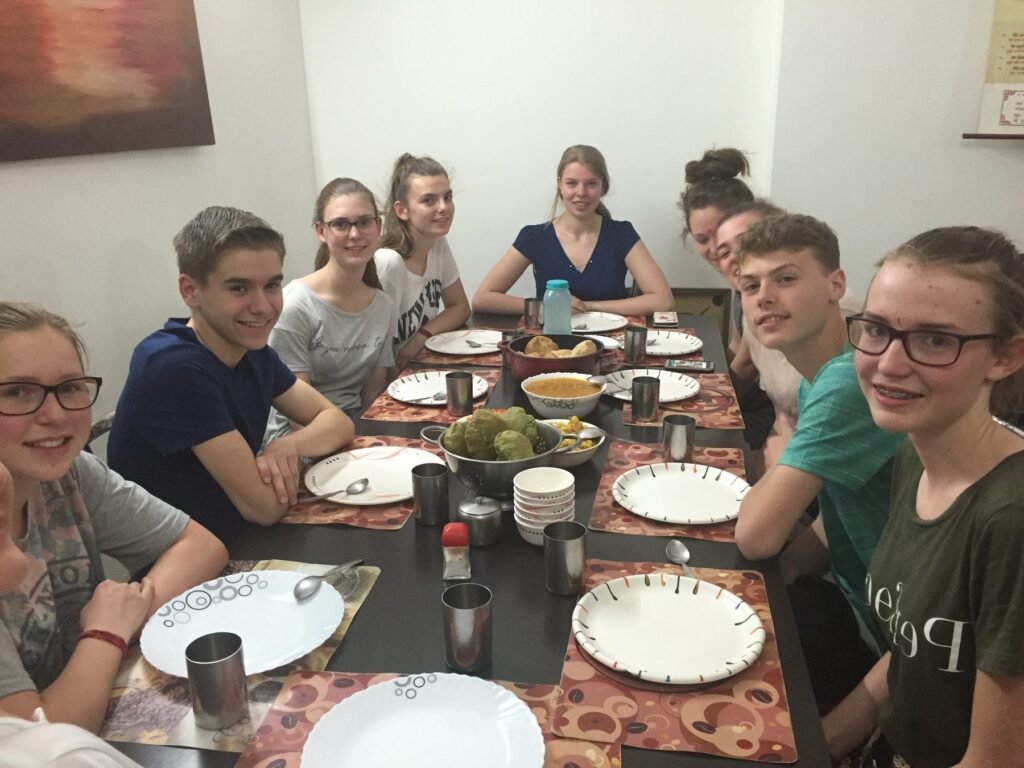
The kitchen serves vegetarian Indian food at breakfast and dinner from Monday to Saturday. Lunch on project days is your own, usually from a dhaba or cafe near your project, and Sundays are free for exploring the city’s food.
Good to know
- Bedding is provided. Bring your own towel.
- Drinking water is filtered for you; bottled water outside is up to you.
- Do your own washing, or hand it to a local laundry for a small charge.
- Tell us about any special diet before you arrive.
- Alcohol and drugs are not allowed at the accommodation.
What your price covers
- Pre-departure information: packing list, visa and health advice, and your coordinator’s details.
- Pickup at Indira Gandhi International Airport between 8am and 8pm on your start date.
- Orientation, and your first trip to the project with your coordinator.
- A shared room at our base in South Delhi for your whole stay.
- Breakfast and dinner, Monday to Saturday.
- Your placement, plus support from our team at any hour.
- A certificate of participation, if you ask for one.
- Your hospital placement and department rotations.
Not included
- Flights and your Indian visa
- Travel and medical insurance, which is compulsory
- Vaccinations
- Lunch on project days and meals on Sundays
- Metro and auto-rickshaw fares to your project
- Your transfer back to the airport (we can arrange it at extra cost)
- Weekend trips, entry fees, a local SIM card and personal spending
Support while you are here
- Your coordinator lives locally, runs your orientation, takes you to your project the first time and checks in with you and the project while you are there.
- Our team can be reached at any hour, every day of your stay, for anything from a lost phone to a hospital visit.
Before you apply
- You are 18 or older on your start date.
- You are a student of medicine, nursing, dentistry or physiotherapy, or a pre-med student.
- Your CV, proof of enrollment and a copy of your passport.
- A clean criminal background check, issued within 12 months of your start date.
- Professional clothes at the hospital. Bring your own scrubs or lab coat, and masks.
- Travel and medical insurance for your whole stay. Your own policy is fine.
- An open mind, patience and reasonable health. Tell us about any medical condition before you travel.
What volunteers say
The projectI really enjoyed working at Csi. The staff were very helpful, friendly and welcoming. Dr. Manish is wonderful. I learnt so much about India's healthcare and poverty. It's a fabulous program.
HighlightIt's hard to choose just one highlight! I really enjoyed living with the family and playing with their young children and celebrate Holi. I also really enjoyed working in the mobile health van, It was such a great learning experience. The trip to Taj Mahal was also very memorable.
Read the full review
Before the tripEveryone was wonderful- Thanks for replying promptly to many emails. The pre departure booklet was very informative and really helped me pack. It would be helpful to know the ages of children in the host family so that I could have bought more age appropriate gifts.
Food and accommodationBeautiful accommodation! Very clean and comfortable. The food was delicious. The host family was so wonderful and very welcoming. I enjoyed learning about traditional Indian Culture.
Our teamThank you for everything. I felt very supported and safe.
Would you recommend us?Yes! Wonderful Program
Kathleen Froese, CanadaHealthcare program
The projectIt was a very unique experience to volunteer at an Ayurvedic Hospital and to see a practice so different than what I am used to seeing.
Read the full review
Our websiteIt was simple and straightforward to apply to the program.
Before the tripIt was very detailed and gave good preperation for the trip.
Food and accommodationOverally there was really no problem the accommodations and the food.The cook was so great to us.Every single meal was delicious and he made Tea and Coffee for us regularly.We also bought eggplant and he kindly made a tasty meal out of it a couple of times.
Our teamThis trip wouldn't have been as much fun without each and every person who helped us everybody.Afzal and Joginder were always so kind. Bobby and Amit - I can't say thank you enough for everything you did for us.
Would you recommend us?Of Course ! Great program coordinators and amazing location.There is so much to explore and discover.
Shirley Xing- Touro College Group Member, USAHealthcare program
The projectKaran Hospital: Surgery was very good. Dr. Karan tought us a lot.
HighlightTrekking Trip!!
Read the full review
Our websiteVery organized, very informative. Had all the information I needed at a glance. Loved the video testimonials. The website made me trust the organization.
Before the tripBRILLIANT, VERY DETAILED.
Food and accommodationCharan is great. Food and accommodation was lovely.
Would you recommend us?Yes!!
Our teamBobby and Amit made this experience worth while. They went out of their ways to help us make the trip smooth. They are funny and always made us feel comfortable and at ease.
Shahina Begum, United KingdomHealthcare program
The projectIt was a great experience. Everyone was so nice and always shared the knowledge and taught me new things.
HighlightI am really satisfied with the volunteering experience because it was in a country completely different to mine.
Read the full review
Our website* Variety of programs.
* Easy access to information.
Before the tripAlways very fast and kind answering to questions.
Food and accommodationAccommodation was really nice and meals too.
Would you recommend us?Yes!!
Nuno Miguel Basílio, PortugalHealthcare program
Questions interns ask
Will I be able to do procedures?
Expect to observe. Basic supervised tasks are sometimes possible if your training and the hospital allow it, but come ready to watch, ask questions and learn.
Which documents do I need?
Your CV, proof that you are enrolled on a medical, nursing or other health course, a copy of your passport and a clean criminal background check. We tell you exactly what to send after you apply.
Can I choose my departments?
Yes. Give us three or four in order of preference when you apply. We confirm what the hospital can offer for your dates, and you rotate between departments if you stay long enough.
Is this suitable for pre-med students?
Yes. Pre-med students usually observe in emergency and internal medicine, where there is the most to see without specialist knowledge.
My university needs forms signed. Can you help?
Tell us what your university needs when you apply. We can provide a certificate of participation, and we will do our best to get your supervisor to complete your elective paperwork.
Where do I eat during the day?
Interns usually have lunch at the hospital, at their own cost. Breakfast and dinner are at the hostel, Monday to Saturday.
What should I wear?
Smart, modest clothes, closed shoes and your own scrubs or lab coat. Bring masks, and a notebook for your rounds.
How much spending money will I need?
Less than you might expect. Lunch near your project, Metro and auto-rickshaw rides and the odd coffee cost little each day; Sunday meals out are cheap too. Budget more for weekend trips, monument tickets and shopping, which is where most volunteers spend their money.
Which visa do I need?
Most volunteers come on an Indian e-Visa, applied for online before you travel. Your passport needs at least six months’ validity after your return and two blank pages. Rules change, so check the official Indian government e-Visa website; we send guidance after you book and can write a supporting letter if you need one.
Do I need vaccinations?
There are usually no compulsory vaccinations for travelers from most countries, but keep your routine ones up to date. Travel clinics commonly recommend hepatitis A and typhoid, plus protection against mosquito bites. See a clinic six to eight weeks before you leave.
Is Delhi safe for volunteers?
Yes, with sensible precautions. You are met at the airport, you live where our team knows the area well, and orientation covers how to get around, what to wear and what to avoid. Use the Metro, pre-booked taxis or ride apps, keep valuables out of sight, and go out in groups at night. Our team can be reached at any hour.
What should I wear at the project?
Light, loose clothes that cover your shoulders and knees, and closed shoes. Cotton kurtas cost little at Delhi’s markets and are cooler than most Western clothes in the heat.
Can I stay longer or combine programs?
Yes. Delhi programs run for up to 18 weeks, and many volunteers start with the Hindi & culture week or add a placement in Jaipur. Tell us your plan when you apply and we line up the dates.
Can I come with a friend, partner or family?
Yes. Tell us who is coming when you apply and we place you together where we can. Ask us about group prices and which programs suit younger travelers.