
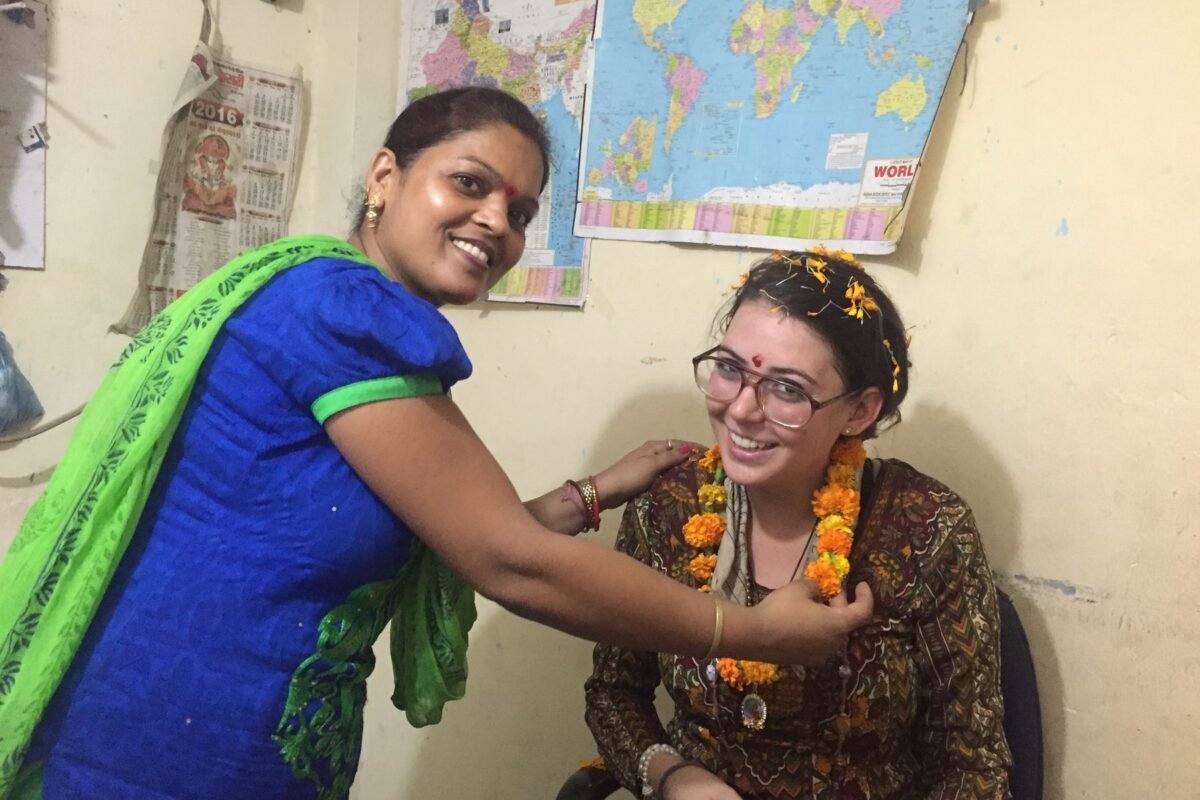
Most tourists see India through a car window: the monuments, the hotel, the restaurant the guide recommends. Volunteers see something different. You live in one neighborhood for weeks, take the same route to work every morning and get to know the people you meet along the way. The country stops being a backdrop and becomes a place you live in.
Here is how to make the most of it and get a real taste of everyday life in India.
Stay with a family
In Jaipur, you can choose to live with a local host family instead of at our volunteer house. You get a twin room in a family home and home-cooked vegetarian food, often paratha or poha for breakfast, and you see family life up close: the morning prayers, the relatives who drop in, the evening debate over what to watch on TV. It is the closest look at Rajasthani life you can get on a short stay. In Delhi, you live at our hostel with volunteers from many countries, which has its own rewards: company at every meal and someone to share every weekend plan.
Learn some Hindi
A few words change the way people respond to you. Namaste (hello), dhanyavaad (thank you), kitna hai? (how much is it?) and accha (OK, good) get you a long way at the market and the chai stall. For a head start, our Hindi and culture week in Delhi combines beginner Hindi classes with open conversations about family life, religion and customs. In Jaipur, orientation includes a few useful phrases, and the people at your project will happily teach you more.
Travel like a commuter
Most volunteers in Delhi reach their projects by Metro and auto-rickshaw, and your coordinator rides with you the first time. The Metro is clean, air-conditioned and inexpensive, and the first carriage of every train is reserved for women. Rush hour is a squeeze, and that is part of the experience: within a week you will be haggling with auto drivers and finding your way through the crowds like everyone else. In Jaipur, volunteers use ride apps and auto-rickshaws to reach projects 20 to 30 minutes away.
Eat where people eat
Breakfast and dinner at the Delhi hostel are vegetarian Indian meals, and on project days you buy your own lunch, usually at a dhaba (a simple roadside eatery) near your project, where a plate of dal, rice, roti and the vegetable of the day costs very little. Sundays have no hostel meals, which makes them the day to explore street food. Drink chai at the corner stall, brewed with milk, sugar and ginger and served in a small glass or a clay cup. If you can, book a home cooking class; several families in Delhi and Jaipur teach visitors to make the dishes they cook every day. Our guide to dishes to try in Delhi and Jaipur will get you started.
Get to know people beyond the tourist trail
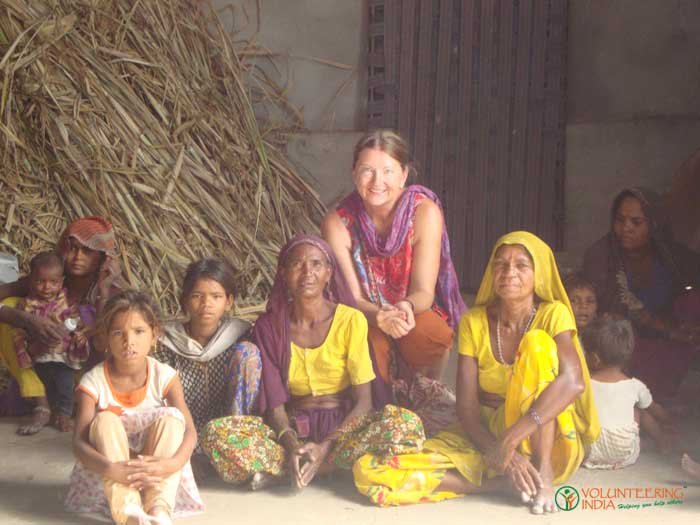
At your project, you will work alongside teachers, carers and community workers, and they often teach you more about India than any guidebook. Accept invitations to tea, and don’t be surprised by personal questions early on: asking whether you are married or what your parents do is a way of being friendly. Cricket and Bollywood are the easiest conversation starters with almost anyone. Learn the name of a cricket star or the chorus of a hit song, and you have broken the ice.
Join the festivals
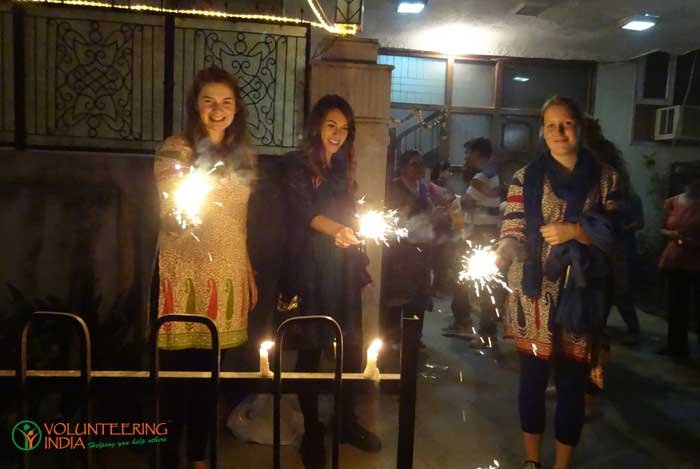
There is a festival almost every month, and most are open to anyone who wants to join in. Diwali, the festival of lights, comes in October or November, with oil lamps, sweets and fireworks. Holi, usually in March, is a day of colored powder and water fights. In Jaipur, the sky fills with kites at Makar Sankranti in mid-January, and women dress in their brightest clothes for Teej during the monsoon. Your coordinator will tell you what is coming up during your stay, and why it matters to the people celebrating.
Take the challenges as part of it
Living in India means traffic jams, crowded trains, heat, noise and the odd power cut, the same things your neighbors deal with every day. Some days it will wear you down; most days it makes for a good story at dinner. Read our tips on dealing with culture shock before you arrive, and talk to your coordinator if things get too much.
Ready to live it for yourself? See our programs in Delhi and Jaipur, or email info@volunteeringindia.com.