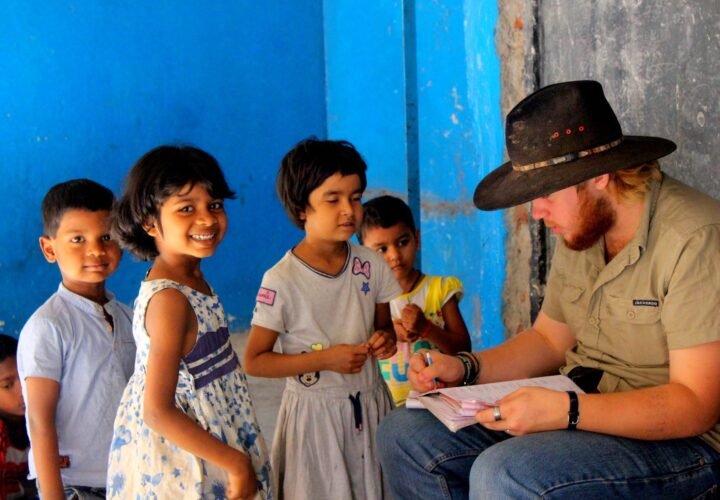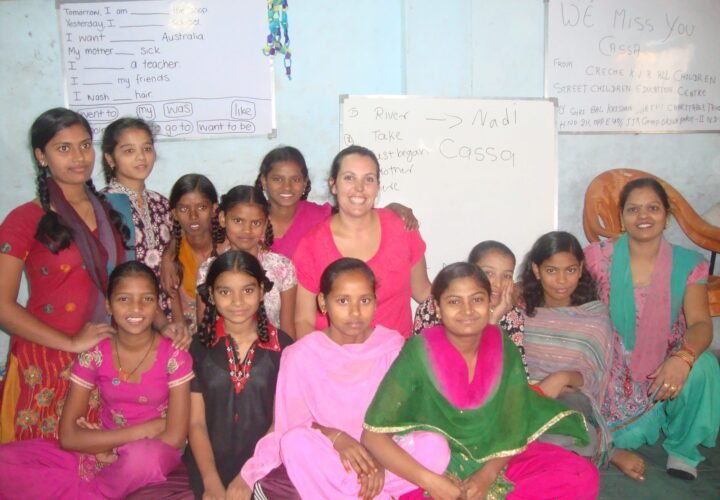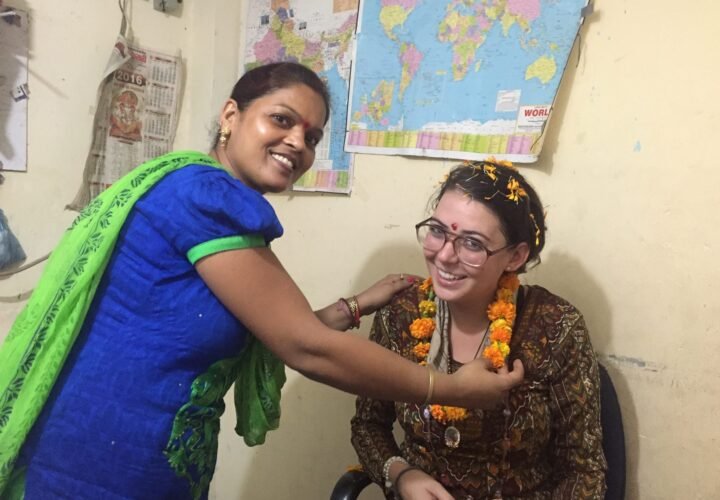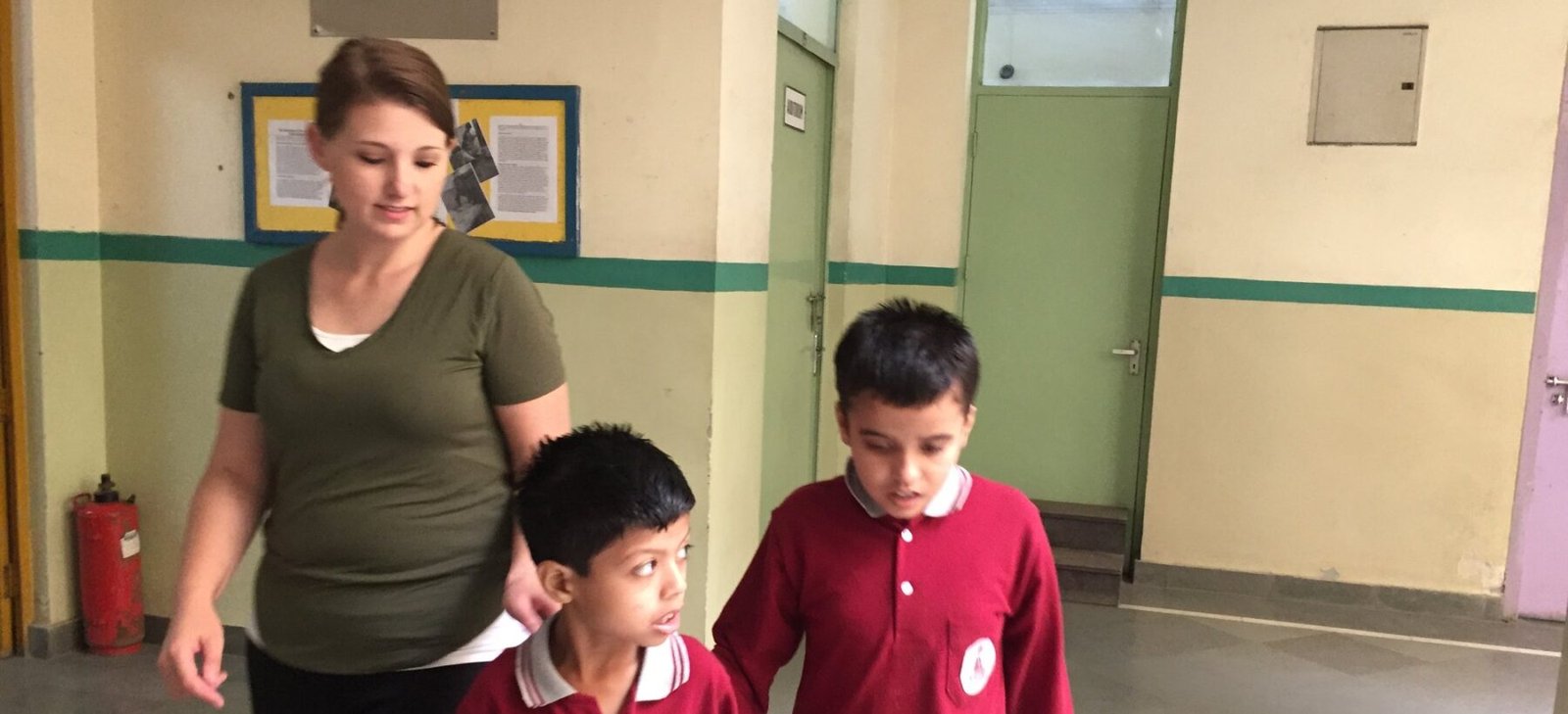
This project brings together three centers: a special education center, a skill development center for young people, and a school for autistic children. Most of the children and young adults they support come from families on low incomes.
Trained staff run the therapy, teaching and vocational programs. Volunteers give the extra attention and practical help that lets those programs reach more people.
At a glance
- Three centers for children and young adults with disabilities, most from low-income families.
- Classroom help, vocational sessions and plenty of one-to-one time.
- Monday to Friday, about 10am to 4pm, with evenings and weekends free.
- Open from age 18; special education experience helps but is not required.
- Stay from one week to 18 weeks, starting on two Sundays a month.
What you’ll do
- Help teachers with classroom and care routines through the day.
- At the skill development center, join vocational sessions such as baking, candle making, clay modelling, tailoring, book binding and computer work.
- At the autism center, help at mealtimes, with simple lessons and daily tasks, and teach songs, dance, origami or painting.
- Come up with new activities that get everyone involved.
- Get to know parents and families, who play a big part in each child’s care.
- If you are qualified in occupational therapy or physiotherapy, support therapy sessions.
About the centers
Support for children with disabilities is hard to come by for families without money, and these centers fill part of the gap. The special education center teaches children whose needs mainstream schools can’t meet. The skill development center works with teenagers and young adults on vocational skills that build independence and, for some, an income. The autism school gives autistic children structured days, therapy and learning.
We place you at the center that needs help most when you arrive, taking your skills and interests into account. Days follow routines the children rely on, so consistency and patience matter more than new ideas in your first week.
Working responsibly
You always work under the center’s trained staff and are never left in sole charge of anyone. Therapy and medical care are for qualified professionals only.
Every volunteer shows a clean background check before starting, and orientation covers our code of conduct for working with children and vulnerable adults.
Progress here is measured in small steps, and the staff know each child well. Watch, ask and follow their lead, and you will be trusted with more as the weeks go on.
A typical day
- 9am: Breakfast at the hostel with the other volunteers.
- 9:30am: Head out by Metro and auto-rickshaw. Your coordinator shows you the route on the first day.
- 10am: Arrive and join the morning routine: greetings, classroom work or a vocational session.
- 12:30 to 2:30pm: Lunch break, usually a thali or a plate of chole bhature at a dhaba near the project, at your own cost.
- Afternoon: Activities, mealtimes and one-to-one time, then helping the staff wind the day down.
- 4pm: Finish and travel back. The rest of the day is yours.
- 7pm: Dinner at the hostel.
Every project keeps its own rhythm, and hours move with school holidays, festivals and the weather. Your coordinator confirms your times at orientation.
How your week runs
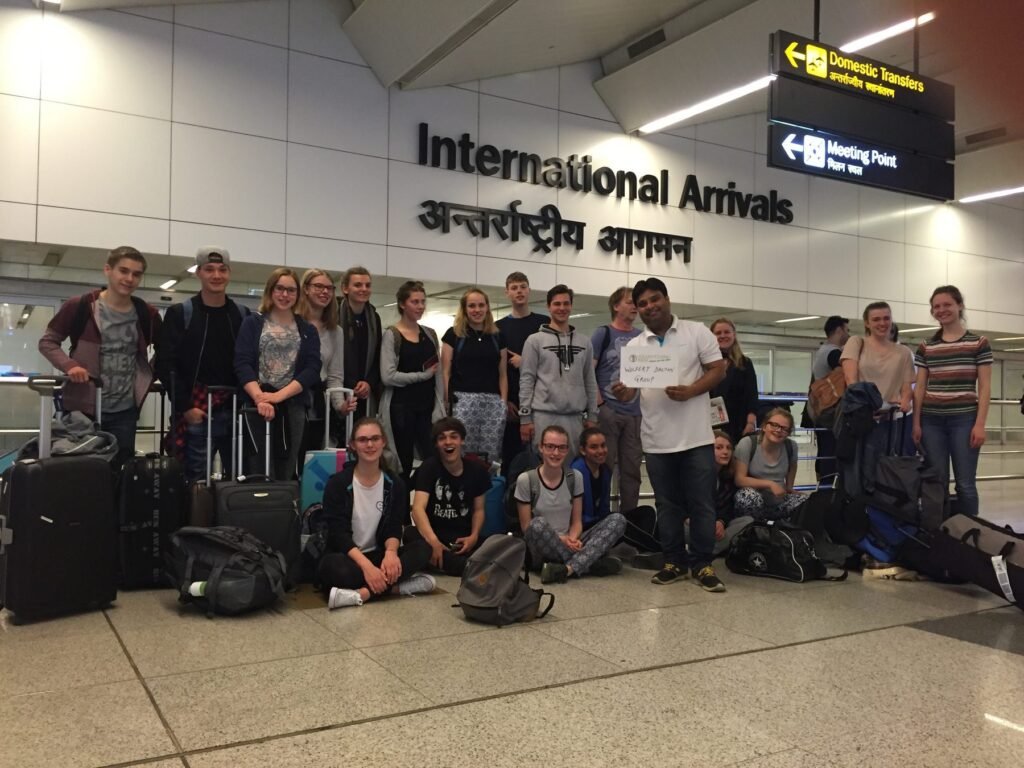
- Sunday: we meet you at Indira Gandhi International Airport and take you to the hostel.
- Monday: a half-day orientation on safety, culture, getting around and how to dress at your project, then a walk around the neighborhood.
- Tuesday to Friday: your first days at the project, about 10am to 4pm. Your coordinator travels with you the first time and shows you the cheapest route by Metro and auto-rickshaw.
- From week two: Monday to Friday at the project. Evenings and weekends are yours.
Evenings and weekends
Project days finish mid-afternoon, so most evenings start with a Metro ride somewhere new and end back at the hostel over dinner with the other volunteers. Delhi rewards curiosity: within an hour of your base you can be eating parathas in the lanes of Old Delhi, watching the light change on Humayun’s Tomb or bargaining for scarves at Sarojini Nagar.
- In the city: Chandni Chowk and the Jama Masjid, the Red Fort, Lodhi Garden, Hauz Khas village, Dilli Haat’s food and craft stalls, and the evening light show at Akshardham.
- Day trips: the Taj Mahal and Agra Fort, an easy day out by train or car.
- Weekends away: the pink sandstone forts and palaces of Jaipur, the Golden Temple in Amritsar, the riverside ghats of Varanasi, or the mountain air of Rishikesh.
Our weekend trips take care of the trains, hotels and guides, and your coordinator is happy to help you plan an independent trip. Sundays have no meals at the hostel on purpose: it is the day to try Delhi’s street food.
Your base in Delhi
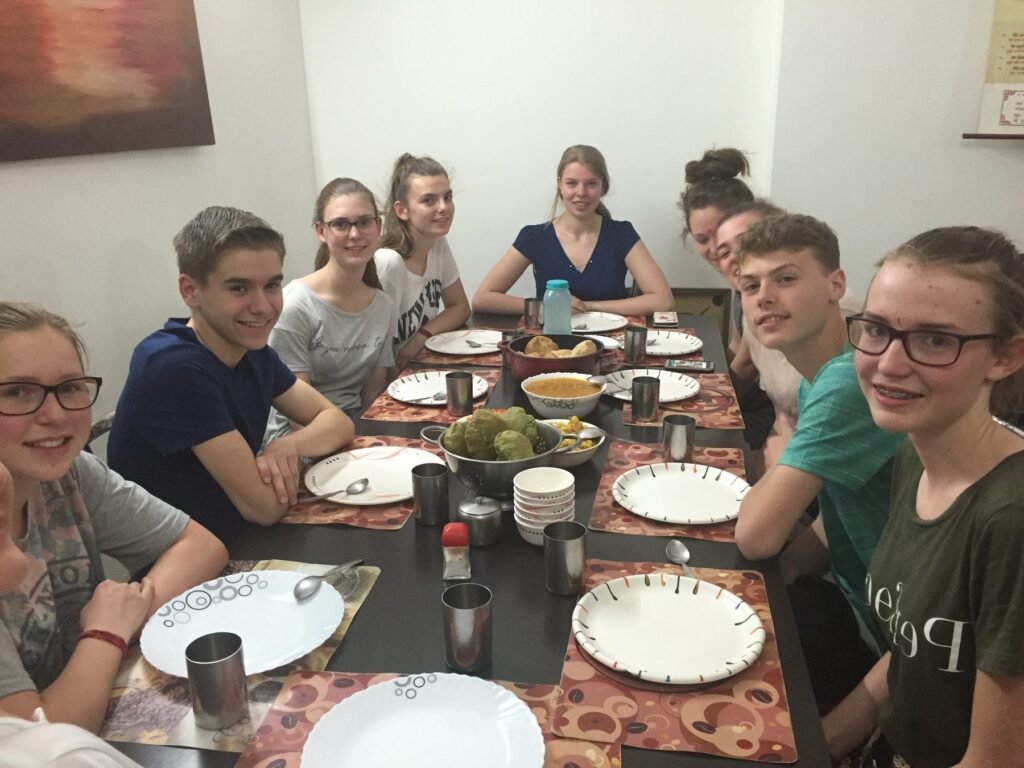
Home is a hostel in the south of the city that we share with volunteers from other projects, so you are rarely short of company for dinner or a weekend plan. The Metro is a few minutes’ walk away, which puts your project and most of Delhi within easy reach, and the Lotus Temple and Khan Market are close enough for a first evening out.
You share a room with volunteers of the same gender, cooled by air-conditioning in the hot months. If you would like a room to yourself, ask when you apply and we will price it for you.
The kitchen serves vegetarian Indian food at breakfast and dinner from Monday to Saturday. Lunch on project days is your own, usually from a dhaba or cafe near your project, and Sundays are free for exploring the city’s food.
Good to know
- Bedding is provided. Bring your own towel.
- Drinking water is filtered for you; bottled water outside is up to you.
- Do your own washing, or hand it to a local laundry for a small charge.
- Tell us about any special diet before you arrive.
- Alcohol and drugs are not allowed at the accommodation.
What your price covers
- Pre-departure information: packing list, visa and health advice, and your coordinator’s details.
- Pickup at Indira Gandhi International Airport between 8am and 8pm on your start date.
- Orientation, and your first trip to the project with your coordinator.
- A shared room at our base in South Delhi for your whole stay.
- Breakfast and dinner, Monday to Saturday.
- Your placement, plus support from our team at any hour.
- A certificate of participation, if you ask for one.
Not included
- Flights and your Indian visa
- Travel and medical insurance, which is compulsory
- Vaccinations
- Lunch on project days and meals on Sundays
- Metro and auto-rickshaw fares to your project
- Your transfer back to the airport (we can arrange it at extra cost)
- Weekend trips, entry fees, a local SIM card and personal spending
Support while you are here
- Your coordinator lives locally, runs your orientation, takes you to your project the first time and checks in with you and the project while you are there.
- Our team can be reached at any hour, every day of your stay, for anything from a lost phone to a hospital visit.
Before you apply
- You are 18 or older on your start date.
- Experience in special education is useful but not required.
- A clean criminal background check, issued within 12 months of your start date, because you will work with children or vulnerable adults.
- Travel and medical insurance for your whole stay. Your own policy is fine.
- An open mind, patience and reasonable health. Tell us about any medical condition before you travel.
What volunteers say
The projectYes, I became very attached to the children in less than 2 weeks and I was very sad to leave them. It was a very rewarding experience.
Read the full review
Our websiteDetailed discription about each program and testimonials. Facebook Fan Page and You Tube videos were also very helpful. My e-mails were responded very quickly.
Food and accommodationThe house was great and the meals were also very tasty.
Our teamBobby is very nice and helpful. He made sure that we were always safe and comfortable.
Would you recommend us?Yes.
Dhvani Katakia, CanadaSpecial needs care
The projectThe daycare work was good and children were fun. The mentally challenged school was great, it is a great setup teaching the older once skills for life. The children are all lovely and I think they crave for adults to play with and get comfort from.
Read the full review
Our websiteWas very informative and everything was very easy to find. The staff answered all emails very quickly and concisely.
Food and accommodationThe food was tasty! The house is lovely and it is great to have a balcony to hang out on.
SightseeingProbably teaching the students at the mentally challenged school and getting to know that children. The trek to Triund as well, plus the weekend trips to Lord Shiva temple and buddhist monestries.
Our teamBoth Amit and Bobby were great and very helpful and informative, both made me feel very welcome and at home.
Would you recommend us?It was perfect for me and what I was looking for as I got to see how the local people live and experience India. I would definetely recommend it. - Yes
Kirsty Murphy, United KingdomSpecial needs care
Questions volunteers ask
Do I need a background in special education?
No, although it helps. Staff guide you, and much of the work is giving time, patience and encouragement.
Which center will I work at?
We place you where help is most needed when you arrive, taking your skills and interests into account. Tell us if you have a preference when you apply.
Can I help with therapy?
Only if you hold a relevant qualification, such as occupational therapy or physiotherapy. Send us proof of it and we will discuss it with the center.
Who will I work with?
Children and young adults with a range of physical and learning disabilities, including autism. The skill development center works mainly with teenagers and young adults.
What makes a good volunteer here?
Patience, a calm manner and a willingness to repeat the same activity until it clicks. If you can sing, draw, dance or make things, bring those skills: they work across any language barrier.
Is it emotionally demanding?
It can be. Staff and your coordinator are there to talk things through, and the other volunteers at the hostel understand what your day was like.
How much spending money will I need?
Less than you might expect. Lunch near your project, Metro and auto-rickshaw rides and the odd coffee cost little each day; Sunday meals out are cheap too. Budget more for weekend trips, monument tickets and shopping, which is where most volunteers spend their money.
Which visa do I need?
Most volunteers come on an Indian e-Visa, applied for online before you travel. Your passport needs at least six months’ validity after your return and two blank pages. Rules change, so check the official Indian government e-Visa website; we send guidance after you book and can write a supporting letter if you need one.
Do I need vaccinations?
There are usually no compulsory vaccinations for travelers from most countries, but keep your routine ones up to date. Travel clinics commonly recommend hepatitis A and typhoid, plus protection against mosquito bites. See a clinic six to eight weeks before you leave.
Is Delhi safe for volunteers?
Yes, with sensible precautions. You are met at the airport, you live where our team knows the area well, and orientation covers how to get around, what to wear and what to avoid. Use the Metro, pre-booked taxis or ride apps, keep valuables out of sight, and go out in groups at night. Our team can be reached at any hour.
What should I wear at the project?
Light, loose clothes that cover your shoulders and knees, and closed shoes. Cotton kurtas cost little at Delhi’s markets and are cooler than most Western clothes in the heat.
Can I stay longer or combine programs?
Yes. Delhi programs run for up to 18 weeks, and many volunteers start with the Hindi & culture week or add a placement in Jaipur. Tell us your plan when you apply and we line up the dates.
Can I come with a friend, partner or family?
Yes. Tell us who is coming when you apply and we place you together where we can. Ask us about group prices and which programs suit younger travelers.