
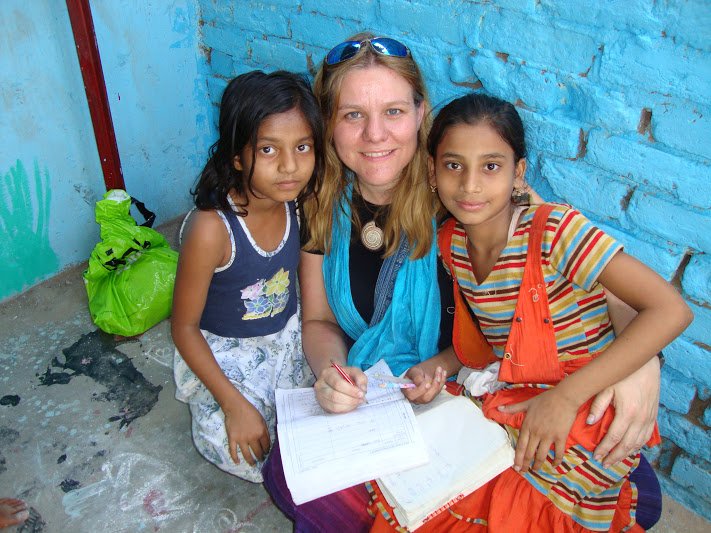
Volunteer teaching in India is fun, tiring and full of surprises. You don’t need a teaching qualification, but a little preparation goes a long way, especially if you have never set foot in an Indian classroom.
Our teaching placements are in Jaipur, in two settings. On the teaching program, you spend your mornings at a government, NGO or community school as an assistant to a local teacher, helping middle-school classes with English, math or sports. On the slum schools program, you work with small groups of children in the afternoons, alongside the project’s own teachers. These eight tips apply to both.
1. Expect a simple classroom
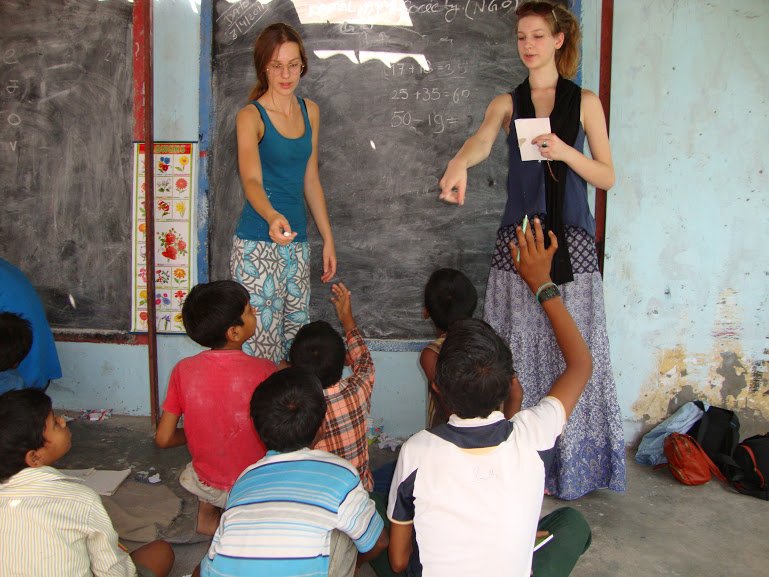
The schools and centers you work in serve families on low incomes. There may be a blackboard, chalk and a few textbooks, and not much else: no projector, no photocopier and, in many rooms, no air-conditioning. Plan lessons that work with what is there. A set of colored pens, flashcards, stickers and a ball covers most needs, and all of them are cheap to buy in Jaipur.
2. Plan for mixed levels
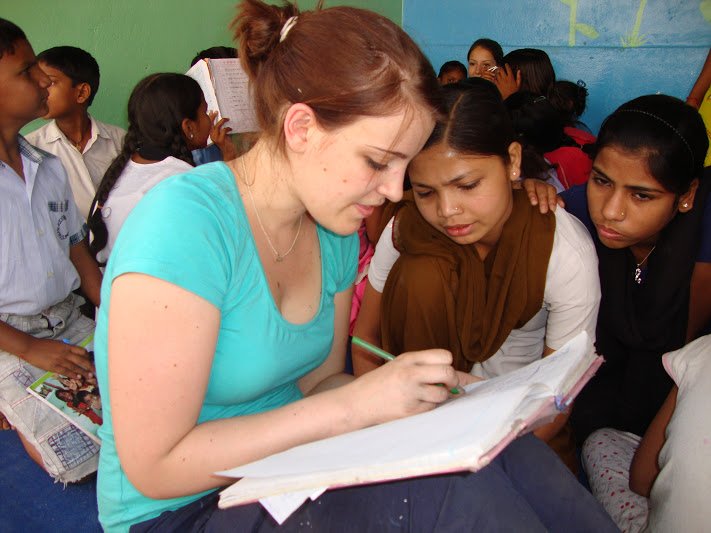
In one class, a child who reads fluently may sit next to one who is still learning the alphabet. Find out where your students are before you plan anything, then prepare each activity in an easier and a harder version. Small groups help: while the teacher works with most of the class, you can take the children who need extra practice, or stretch the ones who finish first.
3. Work with rote learning, not against it
Many children in India are used to learning by repetition: copying from the board, chanting tables and memorizing answers. A class may recite an English poem perfectly and still struggle to answer “What is your name?” Don’t dismiss the method; build on it. Chants and songs are a good way in, and once children are comfortable, you can add questions, pair work and simple conversations that get them using the words they know.
4. Follow the teacher’s lead
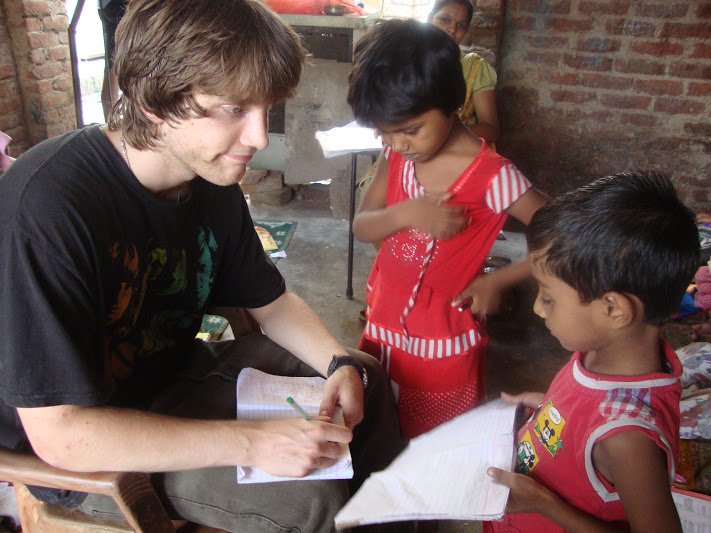
You are there to support the teacher, who stays in charge of the class, the marking and the results. You are never left alone with a class. Ask how the teacher would like you to help, and check before you change a routine or try something new.
That includes discipline. Classroom habits may be different from what you know, so leave behavior management to the teacher. Ask whether the class has a signal, such as a clap or a call-and-response, that brings the room back to order; children respond far better to a routine they know than to a stranger raising their voice.
5. Teach with pictures, games and stories
When English is shaky, pictures and actions do the work. Draw on the board, mime, bring real objects, and turn vocabulary into a game: matching cards, Simon Says, a relay race to touch the right picture. Stories work at every age, especially if the children act them out. Talk about your own country and childhood, too; for some students, you may be the first person from another country they have ever talked to. For more ideas, read our post on activities for volunteering with children.
6. Be ready to be the center of attention
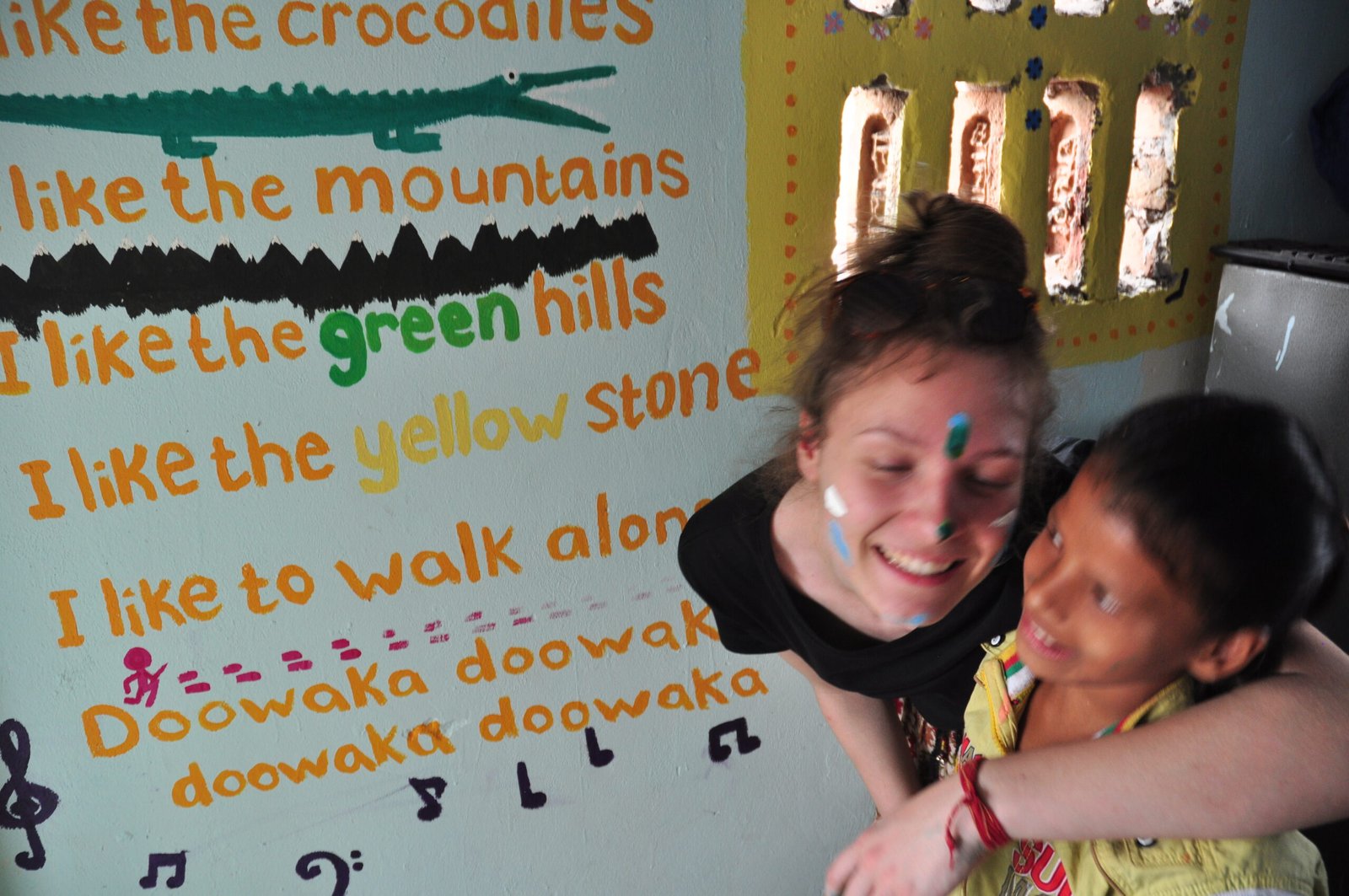
A new face from abroad is big news in a classroom. Expect a flood of questions about your name, your age, your family and whether you are married, and children competing to sit next to you. Enjoy it, and use it: that excitement is easy to turn into attention for a lesson. The staff may be just as curious, and a cup of chai in the staff room is a good way to get to know them.
7. Set an example
Children notice everything. Arrive on time every day, come prepared and dress modestly, with your shoulders and knees covered. Keep your phone in your bag during lessons. Stay patient when things go wrong; the children learn as much from how you behave as from what you teach.
8. Stay flexible, and ask when in doubt
Schools close for exams, holidays and festivals such as Diwali, and timetables can change at short notice. Your coordinator tells you about planned closures ahead of time, but on the day, take changes in stride. If something puzzles you, from how the school system works to why a lesson was canceled, ask the teacher or your coordinator. Indian schools run differently from the ones at home, and people are usually happy to explain.
Thinking about teaching with us? Read our seven reasons to volunteer as a teacher in India, or email info@volunteeringindia.com with your questions.