
Delhi is not a city you can see in a weekend. It has been the seat of one empire after another, and each left something behind: Mughal tombs in quiet gardens, a sultan’s ruined fort, colonial avenues, Sikh gurdwaras, Sufi shrines and markets that have traded spices for centuries. As a volunteer you have time to explore it properly, on weekday evenings after your project and on weekends.
Our hostel is in South Delhi, a few minutes’ walk from the Metro, which reaches almost everything on this list. Before you set off, a few practical points: dress modestly at religious sites, with shoulders and knees covered and a scarf to cover your head; expect to take off your shoes at temples, gurdwaras and mosques; and check opening days, since several sights close one day a week. If you join the Hindi and culture week or the 2-week mini break, a guided tour of Qutub Minar, Humayun’s Tomb, India Gate and the Lotus Temple is part of your program.
Time your trip for a festival and you’ll see the city at its most exuberant: Holi, usually in March, fills the streets with color, and at Diwali, in October or November, homes and markets are strung with lights.
Old Delhi
1. Explore the Red Fort
Shah Jahan’s red sandstone fortress-palace was the seat of the Mughal emperors for about two centuries after its completion in 1648. Walk through the covered Chhatta Chowk bazaar to the marble pavilions where the emperor held court, and look for the flowers inlaid in semi-precious stone. It’s a UNESCO World Heritage Site, and the Prime Minister gives a speech from its ramparts every Independence Day.
2. Ride a cycle-rickshaw through Chandni Chowk
Laid out in the 17th century as the grand avenue of Shah Jahan’s city, Chandni Chowk (roughly “moonlit square”) is now one of Delhi’s busiest markets. Hire a cycle-rickshaw and let the driver weave you through lanes of wedding saris, silver jewelry, spices and sweet shops. Go in the morning, before the crowds peak, and keep your bag in front of you.
3. Visit the Jama Masjid
Completed in 1656, the Jama Masjid is one of the largest mosques in India, with a vast courtyard that fills with worshippers for Friday prayers. Visit outside prayer times and dress modestly (robes are available at the gate), and if a minaret is open, climb it for a view over the rooftops of Old Delhi.
4. Breathe in Khari Baoli
West of Chandni Chowk, Khari Baoli is often described as Asia’s largest wholesale spice market. Porters push past with sacks of chilies, turmeric, cardamom and dried fruit, and the air is peppery enough to make you sneeze. It’s a working market, so step aside for the porters and buy small packs of spices to take home.
5. Eat kebabs and biryani near the Jama Masjid
The lanes facing the mosque’s gates are lined with restaurants and stalls cooking Mughlai food: seekh kebabs off the grill, slow-cooked nihari, rich korma and fragrant biryani. Some of these kitchens have been feeding Old Delhi for generations.
6. Try stuffed parathas in Paranthe Wali Gali
Off Chandni Chowk, this narrow lane has been frying parathas for well over a century. Choose your stuffing, from potato and paneer to more unusual fillings, and eat them hot with chutneys and pickles. The shops are vegetarian.
7. Pay your respects at Raj Ghat
On the bank of the Yamuna, a simple black marble platform marks the spot where Mahatma Gandhi was cremated in 1948, with an eternal flame burning beside it. The lawns around it are calm, and visiting leaders from around the world come here to lay flowers. Take off your shoes before you approach the memorial.
New Delhi
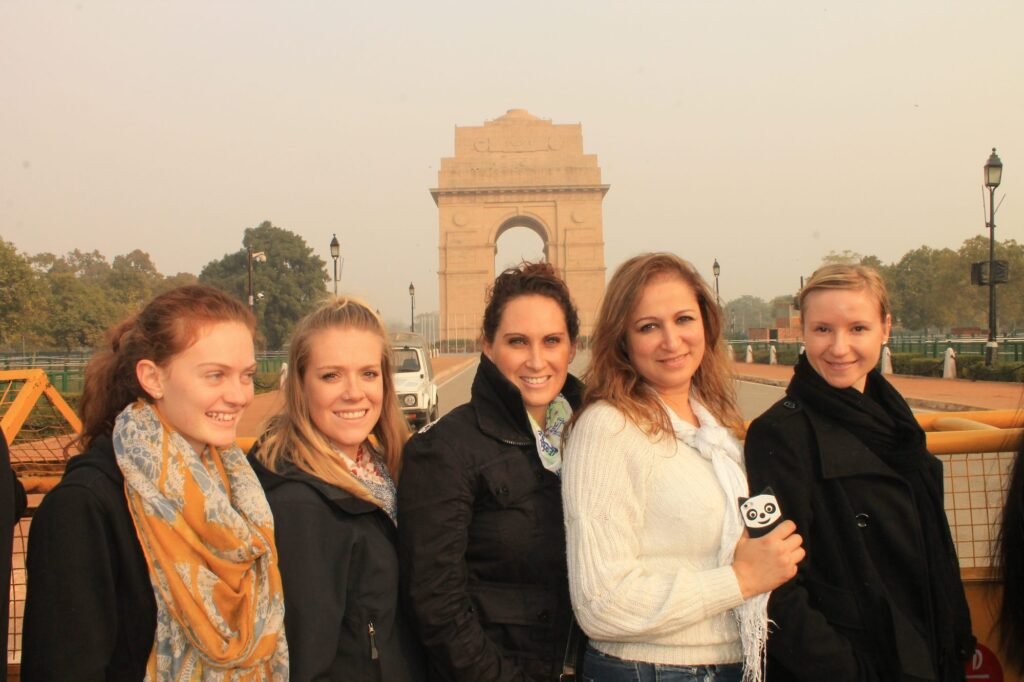
8. Walk Kartavya Path to India Gate
The ceremonial avenue between Rashtrapati Bhavan and India Gate, renamed Kartavya Path in 2022, is lined with lawns and fountains that fill with families on warm evenings. India Gate itself is a memorial to soldiers of the British Indian Army who died in the First World War and the Third Anglo-Afghan War. Just behind it, the National War Memorial honors those who have died for India since independence.
9. See the Change of Guard at Rashtrapati Bhavan
The President’s palace, designed by Edwin Lutyens, stands at the top of Raisina Hill. On Saturday mornings, the Change of Guard ceremony in its forecourt brings a brass band, the President’s mounted Bodyguard and plenty of pageantry, and guided tours of the building run on set days. Register online in advance for both. The gardens, now called Amrit Udyan, open to the public for a few weeks each year, usually in spring.
10. Make sense of Jantar Mantar
Built in the 1720s by Maharaja Jai Singh II of Jaipur, this open-air observatory near Connaught Place is a garden of huge geometric instruments for tracking the sun, moon and stars. If you also visit Jaipur, compare it with the larger Jantar Mantar there, a UNESCO World Heritage Site.
11. Find Agrasen ki Baoli
Tucked between office blocks off Hailey Road, this stone stepwell descends more than a hundred steps between arched walls, growing cooler as you go down. Nobody is quite sure who built it, but it is centuries old and one of the most photogenic corners of the city.
12. Wander around Connaught Place
Built in the 1930s, the rings of white colonnades at Connaught Place are the commercial heart of New Delhi. Come for the cafés, bookshops and restaurants, the stalls of nearby Janpath, good for bargaining over scarves and souvenirs, and the underground Palika Bazaar if you like a maze.
13. Eat at the langar at Gurudwara Bangla Sahib
This white marble gurdwara with its golden domes is one of Delhi’s most important Sikh shrines, and everyone is welcome. Cover your head, take off your shoes and wash your feet, then visit the prayer hall and the holy pool. The community kitchen serves free meals to all comers throughout the day, and visitors are welcome to lend a hand in the kitchen.
14. Ride the joy train at the National Rail Museum
In the leafy diplomatic district of Chanakyapuri, this open-air museum is full of old steam locomotives, royal saloon carriages and models that tell the story of India’s railways. A small joy train carries visitors around the grounds. It makes a fun break from monuments.
Nizamuddin and Lodhi
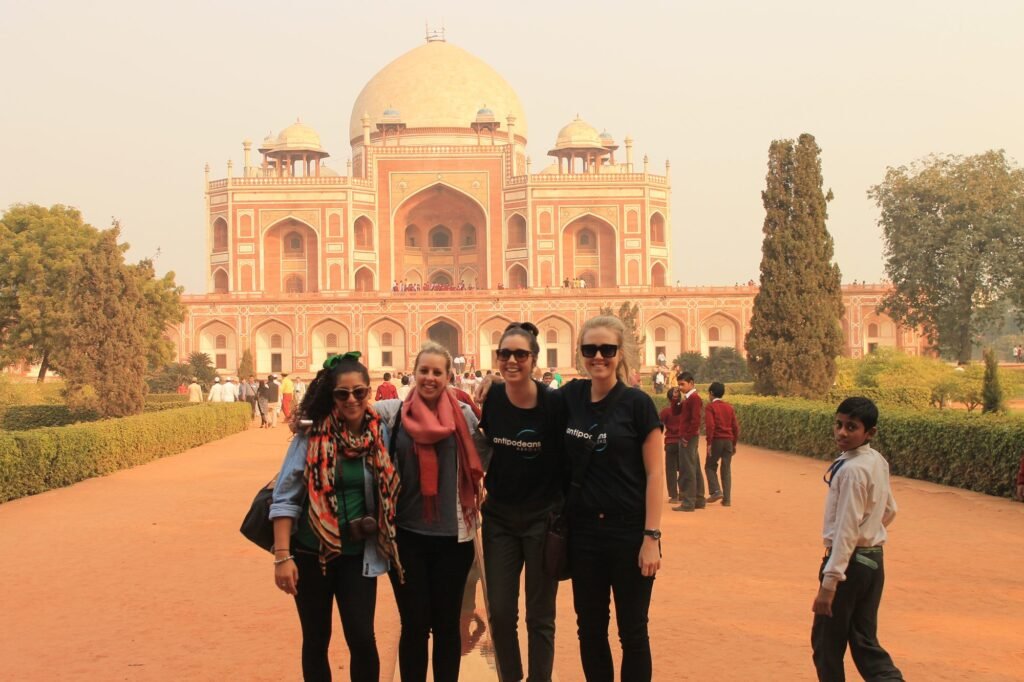
15. Photograph Humayun’s Tomb
Completed around 1570, the tomb of the second Mughal emperor was the first great garden tomb on the Indian subcontinent and a forerunner of the Taj Mahal. Its red sandstone and white marble glow in the late afternoon, and the gardens around it follow the classic Mughal four-part plan. It is a UNESCO World Heritage Site.
16. Relax in Sunder Nursery
Next door to Humayun’s Tomb, this former plant nursery has been restored as a heritage park, with 16th-century Mughal tombs, lily ponds, fountains and lawns made for an afternoon with a book. Birdwatchers love it, and it often hosts weekend markets and guided walks.
17. Listen to qawwali at Nizamuddin Dargah
The shrine of the Sufi saint Hazrat Nizamuddin Auliya, who died in the 14th century, sits in a maze of lanes full of rose-petal sellers and food stalls. On Thursday evenings especially, qawwali singers perform devotional songs in the courtyard, and the music builds to something extraordinary. Dress modestly, cover your head and leave your shoes at the entrance.
18. Take a morning walk in Lodhi Garden
Delhi’s favorite park is scattered with the 15th- and 16th-century tombs of the Sayyid and Lodi sultans. Come early, when joggers, yoga groups and birdwatchers have it to themselves, and you’ll see a gentler side of the city.
19. Have breakfast at Khan Market
A short walk from Lodhi Garden, Khan Market is a compact, upscale shopping street known for its cafés, bakeries and bookshops. It’s the place for coffee and a slow breakfast after your walk, and for picking up a novel for your next train journey.
20. Climb the gateways of Purana Qila
The Old Fort was built in the 16th century by the emperor Humayun and his rival Sher Shah Suri, on a site that archaeologists believe has been lived on for well over two thousand years. Explore its massive gateways, the Qila-i-Kuhna mosque and the Sher Mandal, the octagonal tower where Humayun is said to have fallen to his death on the stairs.
21. Shop for crafts at Dilli Haat
This open-air market brings together craftspeople from all over India, selling shawls, block prints, pottery, jewelry and paintings, while food stalls cook dishes from different states. There’s a small entry fee, and it’s one of the easiest places in Delhi to find good-quality gifts. Read our tips on souvenirs to take home.
22. Bargain at Sarojini Nagar Market
Sarojini Nagar is where Delhi’s students shop: piles of cheap clothes, many of them export surplus, plus shoes, bags and accessories, all open to haggling. Go with time to spare, a sense of humor and your best bargaining face, and watch your belongings in the crowds.
South Delhi
23. Sit in silence at the Lotus Temple
Shaped like a white marble lotus opening its petals, this Bahá’í House of Worship welcomes people of all faiths to its prayer hall, where visitors sit in silence. Take off your shoes at the entrance and allow time to sit for a while. It’s close to our hostel, so it makes a good first outing.
24. Spend an evening in Hauz Khas Village
Once a village beside a medieval reservoir, Hauz Khas is now a warren of boutiques, cafés and bars. Behind them lie the lake, dug around 1300 to supply Alauddin Khalji’s city of Siri, and the 14th-century madrasa and tomb of Firoz Shah Tughlaq, beautiful at sunset. The deer park next door is good for a stroll.
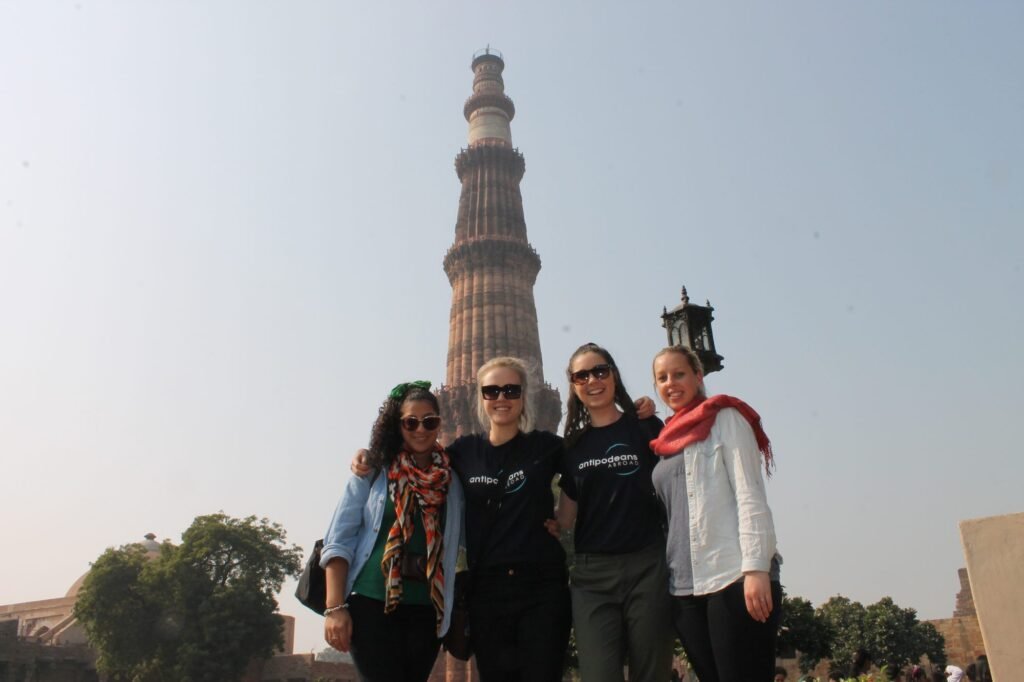
25. Stand beneath the Qutub Minar
Begun at the end of the 12th century, this fluted sandstone tower rises about 73 meters above a complex of early Islamic monuments, including the ruins of one of the oldest mosques in North India and an iron pillar that has barely rusted in more than 1,500 years. It’s a UNESCO World Heritage Site.
26. Explore Mehrauli Archaeological Park
Right next to the Qutub complex, this wooded park holds more than a hundred monuments from the 11th century onward: tombs, mosques, stepwells and a British official’s folly. Look for the Jamali Kamali mosque and tomb, the deep Rajon ki Baoli stepwell and the tomb of Balban, a 13th-century sultan. Go in daylight and in a group.
27. Visit the Chhatarpur temples
This large complex of marble temples on Delhi’s southern edge is dedicated mainly to the goddess Katyayani, a form of Durga. It’s at its liveliest during Navratri, the nine-night festival held in autumn and again in spring, when it fills with devotees. A Metro station of the same name is close by.
28. Scramble around Tughlaqabad Fort
Built in the 1320s by Ghiyas-ud-din Tughlaq, founder of the Tughlaq dynasty, this vast ruined fort on the city’s southern edge has massive sloping walls and wide views. Legend says it was abandoned after a curse from the saint Nizamuddin Auliya. Go in the cooler months, in a group, and bring water: there is little shade.
Farther out
29. See Akshardham in the evening
East of the Yamuna, this huge temple complex, opened in 2005, is carved from pink sandstone and white marble in astonishing detail, with exhibitions on Indian culture and an evening water show. Security is strict: phones, cameras and bags must be left in the cloakroom, so go with friends and agree on a meeting point. The Hindi and culture week includes a visit.
30. Eat momos in Majnu ka Tilla
In north Delhi, beside the Yamuna, the Tibetan settlement of Majnu ka Tilla has grown since the 1960s into a tangle of lanes with a small monastery, prayer flags, shops and cafés. Come for momos, thukpa and butter tea. It’s also where many overnight buses leave for McLeod Ganj and the mountains.
31. Go birdwatching at Sultanpur National Park
About an hour’s drive southwest of Delhi in Haryana, this small park around a lake draws thousands of migratory birds in winter, roughly from October to March: storks, herons, pelicans and many kinds of ducks and geese. Go early in the morning and bring binoculars.
Beyond Delhi
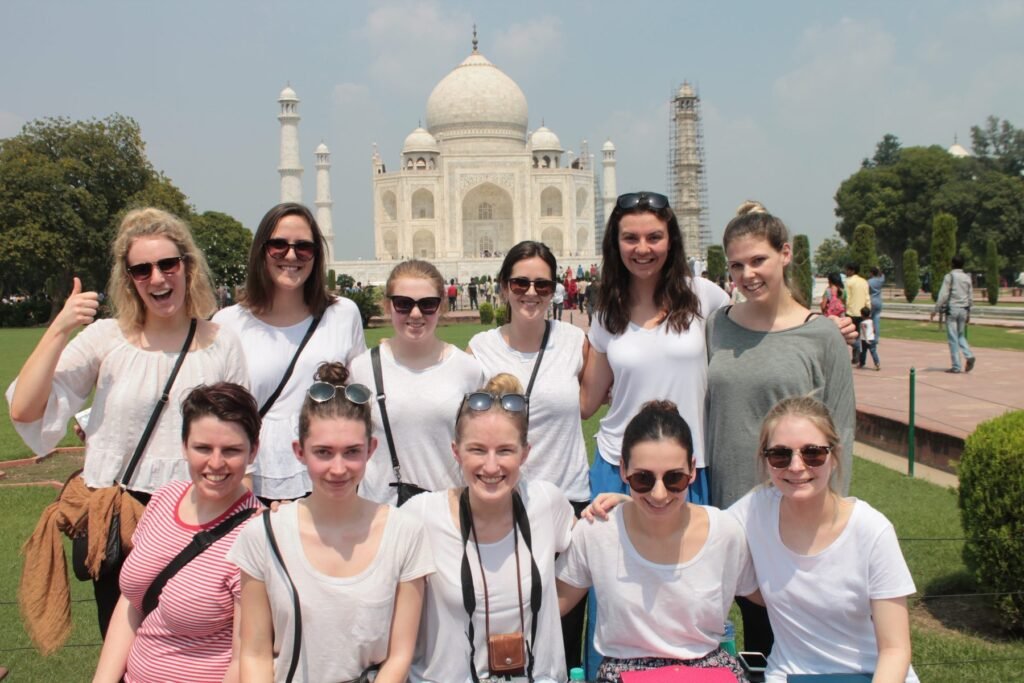
Delhi is also a good base for seeing more of India. The Taj Mahal is about three hours away by road, and our Taj Mahal day trip fits into a Saturday or Sunday; our other weekend trips go to Jaipur, Amritsar and Varanasi. For trips you plan yourself, see our weekend escapes from Delhi and Jaipur.
Ready to volunteer in the capital? See our Delhi programs or email info@volunteeringindia.com with your questions.