
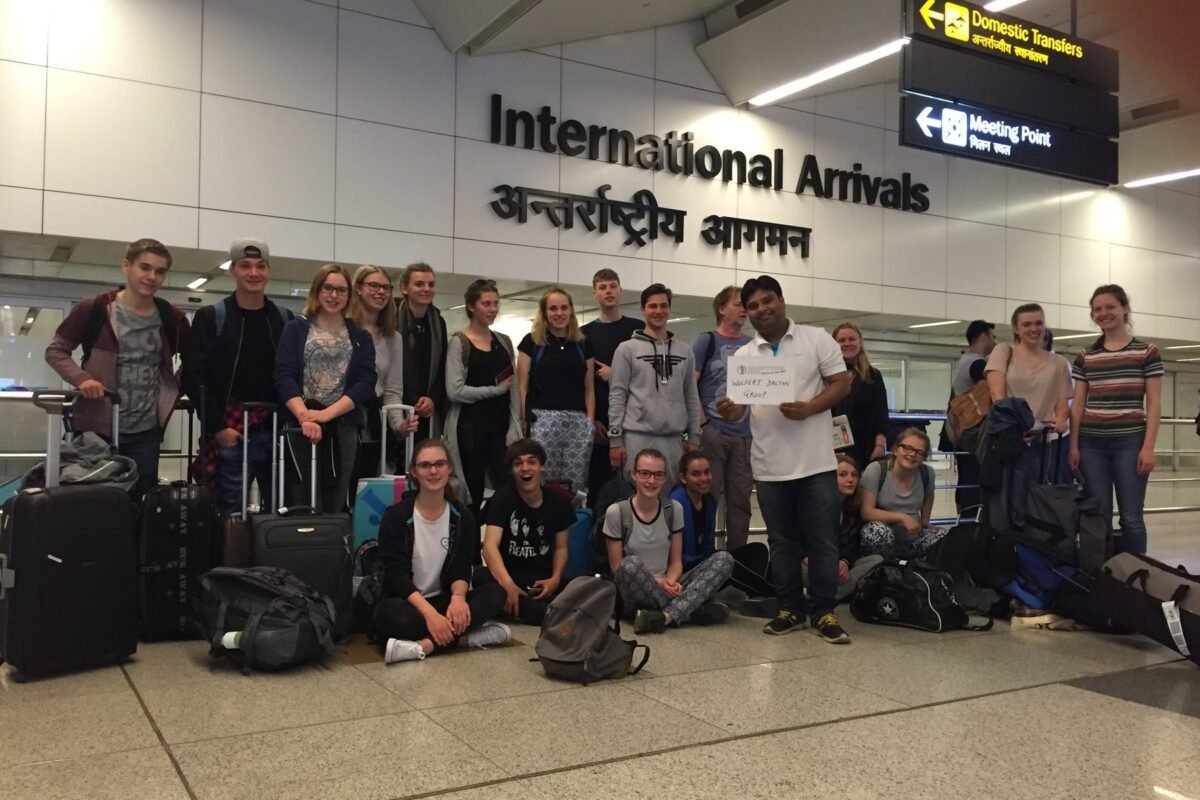
Your daily commute is one of the best ways to get to know Delhi. On the way to your project you’ll squeeze onto the Metro with office workers and students, bargain with auto-rickshaw drivers and pass corners of the city most visitors never see. Taking taxis everywhere for weeks would add up fast, while local transport is cheap and, after a few days, second nature.
Our volunteer hostel in South Delhi is a few minutes’ walk from a Metro station, and your coordinator travels with you to your project the first time to show you the cheapest route. These are the options you’ll use most.
Delhi Metro
The Metro is the backbone of the city. Since its first line opened in 2002, it has grown into a huge network that covers most of Delhi and reaches the neighboring cities of Gurugram, Noida, Ghaziabad and Faridabad. Trains are air-conditioned and frequent, and much faster than the roads at rush hour.
- Tickets: buy a single-journey ticket at the station, from the counter or a machine, or a QR ticket on the official Delhi Metro app. Staying a few weeks? A rechargeable travel card saves time in line.
- Women’s coach: the first coach in the direction of travel is reserved for women, and it is usually calmer at busy times.
- Security: every station has a bag scanner and a quick security check, with a separate line for women, so allow a few extra minutes.
- Rush hour: trains are packed on weekday mornings and early evenings. Keep your bag in front of you and your phone in a zipped pocket.
Auto-rickshaws
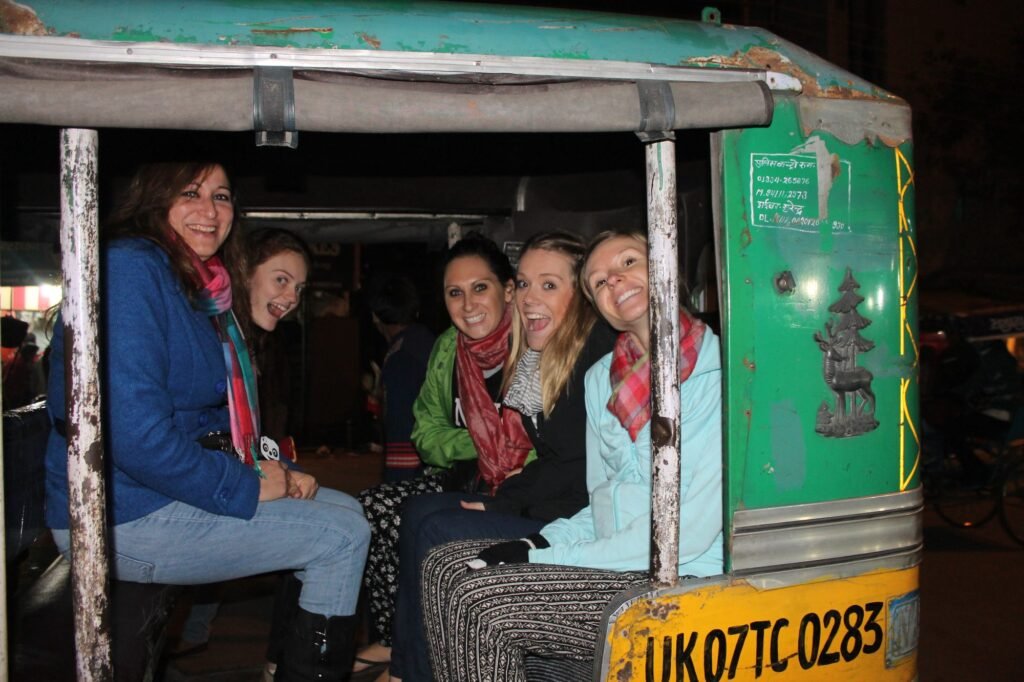
The green-and-yellow auto-rickshaw, or auto, is Delhi’s all-purpose ride: a three-wheeler that runs on compressed natural gas and goes where the Metro doesn’t. Most volunteers ride the Metro to the nearest station and take an auto for the last stretch to their project.
Autos have meters, but drivers often prefer to name a price. Agree on the fare before you get in, or book an auto through a ride-hailing app so the price is fixed up front. Ask your coordinator what common journeys should cost, and if a quote sounds too high, smile and try the next driver. A few words of Hindi help.
Ride-hailing apps
Uber, Ola and Rapido are widely used in Delhi. You can book a car or an auto, see the price before you confirm and share your trip details with a friend, which makes them a good choice at night or when you’re carrying shopping. Some apps work best with an Indian phone number, so get a local SIM card when you arrive; your coordinator can help you set one up. Before you get in, check that the number plate matches the one in the app, and sit in the back. Our list of travel apps for India has more.
Buses
Delhi’s buses are the cheapest way around and reach almost every corner of the city, and many are new, air-conditioned electric buses. They are also the trickiest option for newcomers: it isn’t always obvious which bus to take or where to get off, and they get very crowded. Google Maps shows many routes, and tickets are sold on board. Give them a try once you know your way around, ideally with a volunteer who has used them before.
E-rickshaws and cycle rickshaws
For short hops, say from a Metro station to a market or to a project a kilometer away, look for the battery-powered e-rickshaws that wait outside many stations. They often follow set routes and are shared with other passengers, so a ride costs very little. Cycle rickshaws still work the lanes of Old Delhi and many neighborhoods, and a ride through the crowds around Chandni Chowk is a classic Delhi experience. Agree on the fare first, and hold on: the ride can be bumpy.
Trains for weekends away
For trips out of the city, the train is the way to go. Fast day trains link Delhi with Agra, Jaipur and Amritsar, and overnight sleeper trains run farther, to places like Varanasi. Book a reserved seat or berth in advance, as popular trains fill up, especially around festivals. Your coordinator can help you book, or you can join one of our weekend trips; the Amritsar and Varanasi trips include the train tickets.
Tips for getting around
- Carry small notes and coins, as drivers often can’t change large notes.
- Save your hostel’s address and a nearby landmark on your phone, and ask your coordinator to write it in Hindi too.
- Avoid the roads at rush hour where you can, and leave extra time on project days.
- At night, use the Metro or a ride-hailing app rather than flagging down a vehicle in the street, and travel with other volunteers.
- Local transport isn’t included in your program price, but it’s one of the smallest costs of your stay.
- Volunteering in Jaipur? Projects there are 20 to 30 minutes from where you stay, and our team helps you set up the ride apps volunteers use to get there.
Once you know your way around, our list of things to do in Delhi will keep your evenings full. To find out more about our volunteer programs in Delhi, email info@volunteeringindia.com.