
India’s Constitution guarantees women equal rights, and women have held the country’s highest offices. Yet in the poorest neighborhoods of its cities, many women and girls still miss out on the basics: a full education, a skill that brings in money, and the confidence to speak up at home and in public.
The community centers we work with try to close that gap. Local organizations run them in low-income neighborhoods of Delhi and Jaipur, and volunteers help their staff with classes. Here is why the work matters, and what you would actually do.
Why this work matters
Education builds independence
A woman who can read a form, count her change and use a phone or a computer has more control over her own life. Many of the women at these centers left school early or never went, so literacy classes cover the essentials, while younger students work on spoken English and computer skills that can help them find a job.
Skills bring an income
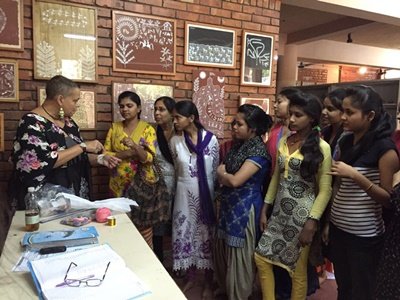
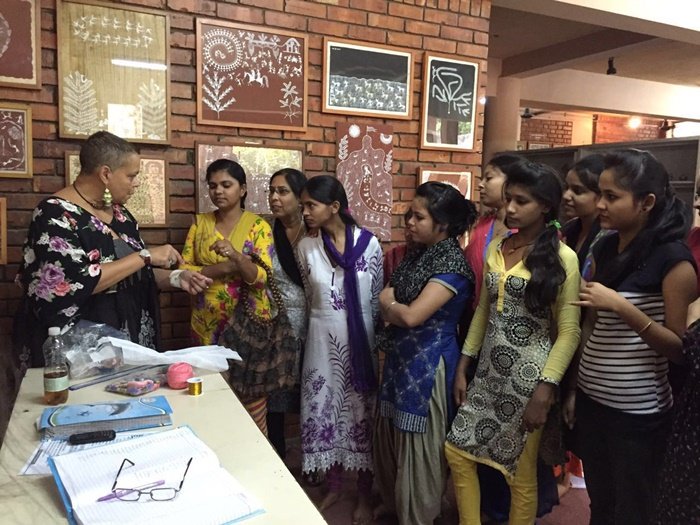
The vocational classes are practical: sewing, embroidery, stitching and beauty work. A woman who learns tailoring can take in work at home or find a job, and earning her own money can give her a stronger voice in her family.
Health knowledge travels
Sessions on health, hygiene and nutrition give women information that many never received at school, and it rarely stops with them. A mother who learns something new about hygiene or nutrition can pass it on to her children.
Confidence runs through all of it
The biggest change is often the hardest to measure. Students who once stayed silent start asking questions, joining discussions and making plans for their future. Volunteers help that confidence grow simply by listening, encouraging and taking every student seriously.
What volunteers do in Delhi
Our women’s empowerment program in Delhi places you at community centers run by local NGOs in the city’s urban slums. For most volunteers, the main job is teaching spoken English to young women, most of them aged about 17 to 20. You might also:
- Help staff with reading and writing classes for adult women.
- Teach basic computer skills.
- Lead discussion groups where teenage girls practice speaking up and talk about their plans.
- Support vocational classes in sewing, embroidery, beauty work or crafts, if you have the skills.
Project days run Monday to Friday, about 10am to 4pm. You can join from age 17, for one week to 18 weeks.
What volunteers do in Jaipur
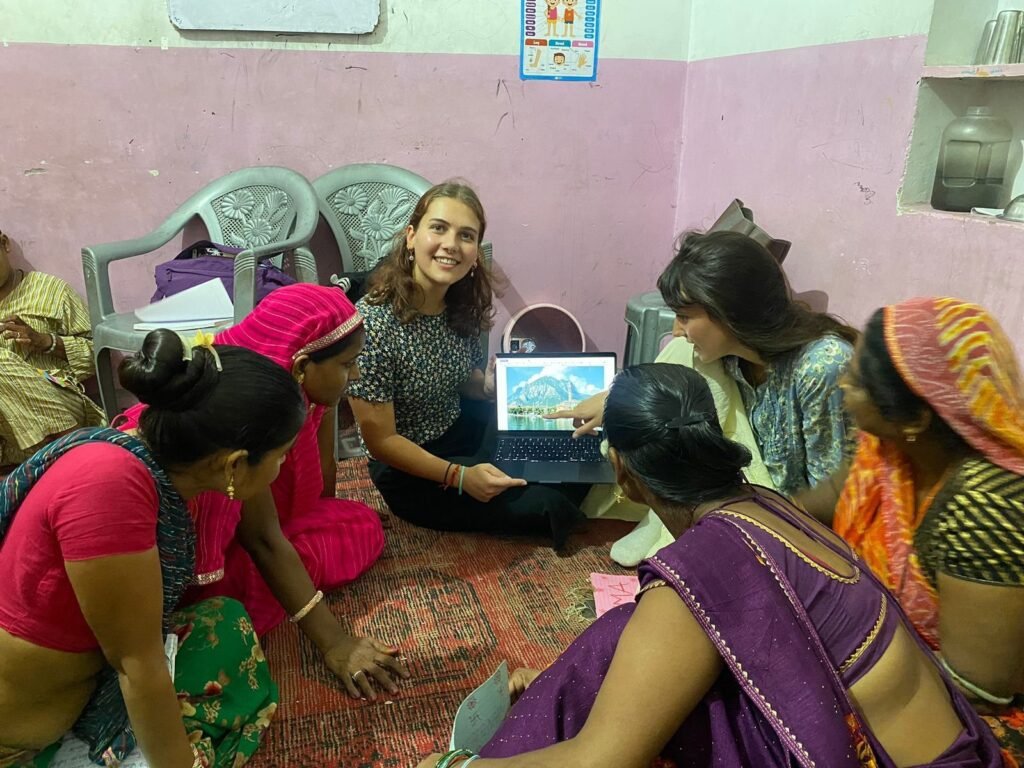
In Jaipur, our women and girls program works with a community women’s center in a slum area. English is rare in this conservative neighborhood, so pictures, gestures and games are as useful as words. Volunteers:
- Hold English conversation classes for girls aged 12 to 17.
- Run health and hygiene sessions with women.
- Support literacy classes and help with stitching and crafts.
- Give basic computer lessons to girls who want them.
Sessions run Monday to Friday, about 1pm to 6pm, leaving your mornings free. You can join from age 17, for one week to 12 weeks, starting any Sunday.
Your role: support, not lead
The centers run all year, with or without volunteers. Their staff plan the classes, know every student and decide what each group needs; your job is to add an extra teacher and plenty of conversation practice. Volunteers don’t give professional counseling or medical advice, and anything sensitive stays with the staff. Because you will work with teenage girls, you need a clean criminal background check issued within 12 months of your start date, and staff are present at every session.
No special qualifications are needed. If you have a skill to share, such as sewing, crafts, computing or health knowledge, tell us when you apply. At the center, dress modestly, with your shoulders and knees covered; our guide to what to wear while volunteering in India can help.
Want to help women and girls build skills and confidence? Email info@volunteeringindia.com, and we will help you choose between Delhi and Jaipur.