
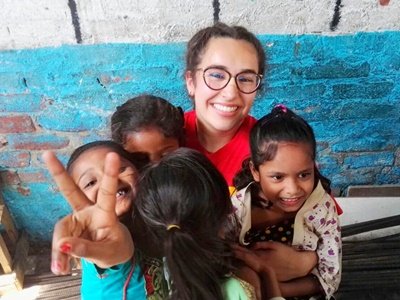
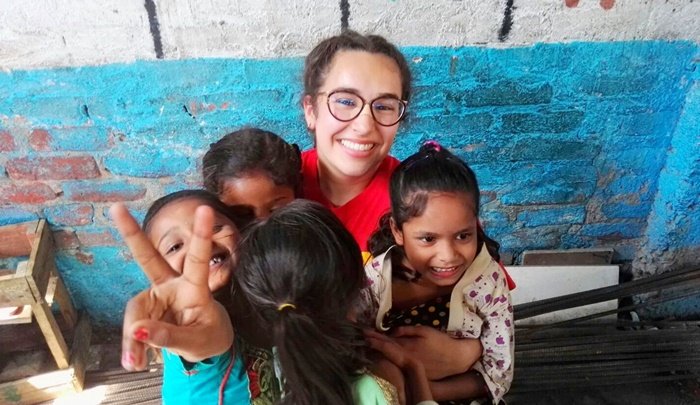
Thinking about joining our street children program in Delhi? This guide covers the practical side: how the centers work, what a normal day looks like, how you get to your project, what to carry in your day bag and the rules that keep children safe. For ideas on what to do with the children once you are there, see our post on activities for volunteering with children.
The program at a glance
- Where: shelter homes and non-formal education centers for children from Delhi’s slums and streets.
- When: Monday to Friday, about 10am to 4pm. Evenings and weekends are yours.
- How long: one week to 18 weeks, starting on two Sundays a month.
- Who: anyone aged 17 or over, with no teaching or childcare experience needed. Under-18s need a consent form signed by a parent.
- Before you come: a clean criminal background check issued within 12 months of your start date, and travel and medical insurance for your whole stay.
How the centers work
You join one of two kinds of center, both run by local organizations with their own staff. Shelter homes give a home to children who have lost contact with their families or were living on the street; the staff make sure they eat, sleep safely and go to school. Non-formal education centers are set up inside slum neighborhoods for children who have never been enrolled in school or who have dropped behind, and they teach each child from wherever they are.
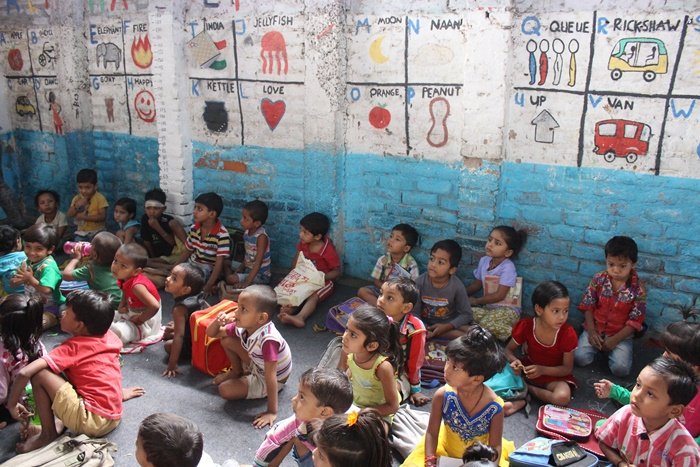
Expect a mixed group. Little ones learning their letters often sit beside older children making up for years of missed school, sometimes in a single room with a whiteboard and a box of supplies. The staff know every child and decide what happens each day. Which center you join depends on where help is needed when you arrive; your coordinator decides and introduces you to the team.
Your first three days
Sunday: fly into Indira Gandhi International Airport on your start date. Our team meets you between 8am and 8pm and takes you to the hostel in South Delhi, where you meet volunteers already working on other projects.
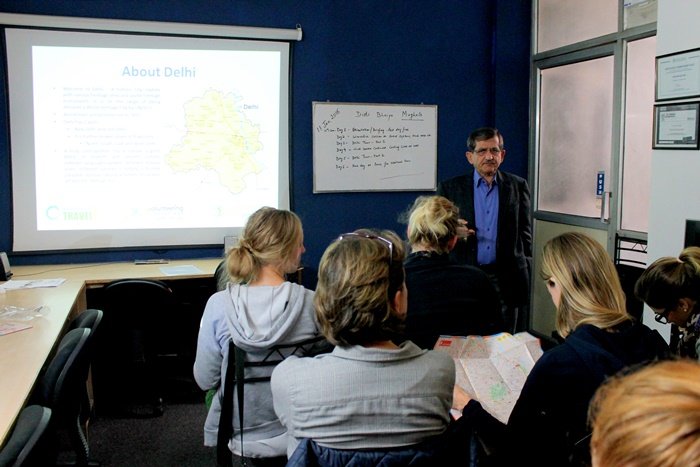
Monday: orientation. Your coordinator talks you through staying safe, Indian customs, getting around, what to wear at your project and a handful of Hindi words that make a real difference with the children.
Tuesday: your first day at the center. Your coordinator travels with you, shows you the route and introduces you to the staff.
A typical day
Breakfast at the hostel is around 9am, and by 9:30am most volunteers are on their way to the Metro. You reach the center at about 10am.
Mornings are usually for lessons: English, numbers and general knowledge, often with the children split into small groups by level. After a long lunch break, which most volunteers spend at a dhaba or cafe near the project, the afternoon is for games, art, music or sport. You finish around 4pm, and the rest of the day is yours. Dinner is back at the hostel with the other volunteers.
Timings vary from center to center and shift with school holidays, festivals and the weather, so your coordinator confirms yours at orientation.
Getting there by Metro
The hostel is a few minutes’ walk from a Metro station, and the Metro is the quickest way across Delhi. Most volunteers reach their project with a Metro ride and a short auto-rickshaw trip. After the first day, you travel on your own or with other volunteers.
- Every station has a security check, so allow a few extra minutes and keep your bag light.
- Most trains have a women-only coach at the front.
- Trains are crowded at rush hour, so move toward the doors a stop before yours.
- Agree the fare before you get into an auto-rickshaw, or book one through a ride app.
- Fares are low, but they are not included in your program price.
For more on buses, autos and ride apps, read our guide to getting around Delhi on a budget.
What to bring
Pack a small day bag with:
- A refillable water bottle. Drink only filtered or bottled water.
- Hand sanitizer, tissues and a packet of wet wipes.
- A notebook for lesson ideas and the children’s names.
- A few simple teaching aids: colored pens, flashcards, stickers, a soft ball or a picture book.
- Photos of your family, your home and your town. Children love them, and they start a conversation without needing much English.
- A light scarf, useful against sun and dust and for covering up.
Dress modestly, covering your shoulders and knees, and wear closed shoes. Pens, pencils, exercise books and art supplies make useful donations. You can buy them cheaply in Delhi, which also supports local shops, but ask your coordinator what your center is short of before you shop.
Working responsibly
The children are in the staff’s care, not yours, and a few rules make sure it stays that way:
- Staff stay in charge. They plan the day, decide what is taught and remain responsible for the children. You work alongside them and are never left in sole charge of a child.
- Photos need permission. Ask the staff before you take any, follow the center’s rules, and never post pictures that show where a child lives or studies, or that a child would not be happy to see online.
- Give to the center, not to individual children. A gift for one child can upset the others, so hand donations to the staff to share out.
- Know the code of conduct. Orientation covers our rules for working with children, including physical contact.
- No orphanages. We don’t place volunteers in orphanages. Our post on what to know before volunteering with street children explains why.
The most useful volunteers fit in with how each center already works. Watch for the first few days, ask questions, and save your bigger ideas until you know the children and the routine.
Where you stay and what you eat
Home is a hostel in South Delhi that you share with volunteers from other projects, so there is usually someone to explore with. You share a room with volunteers of the same gender, and rooms are air-conditioned in the hot months. If you would rather have a room to yourself, ask when you apply; it costs extra.
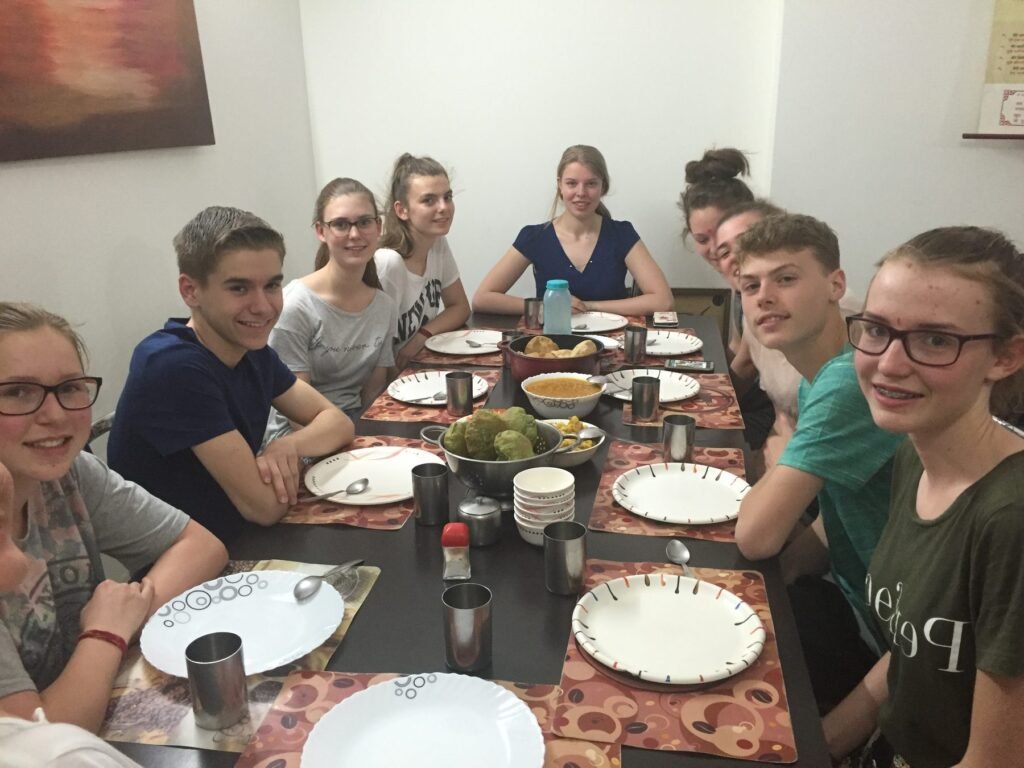
The hostel serves vegetarian Indian breakfast and dinner from Monday to Saturday. On project days, you buy your own lunch near the center. Sundays have no meals, which makes them a good day to try Delhi’s street food. Tell us about any special diet before you arrive.
Evenings and weekends
With project days finishing mid-afternoon, there is time to see a lot of Delhi. The city has three UNESCO World Heritage Sites (Qutub Minar, Humayun’s Tomb and the Red Fort) and plenty more besides: the lanes of Old Delhi around Jama Masjid, the Lotus Temple, India Gate, and the markets at Janpath and Sarojini Nagar, where bargaining is expected.
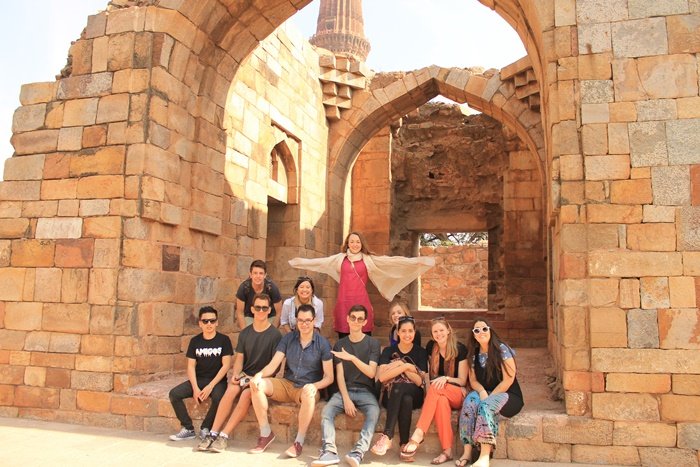
At weekends, you can join one of our weekend trips: a day at the Taj Mahal (closed on Fridays), a weekend in Jaipur, three days on the Golden Triangle, the Golden Temple in Amritsar or the ghats of Varanasi. Your coordinator can also help you plan trips of your own.
Ready to join?
Programs start from $495 for one week. See dates and prices for the street children program, or email info@volunteeringindia.com with any questions. Our team in New Delhi will be glad to help.